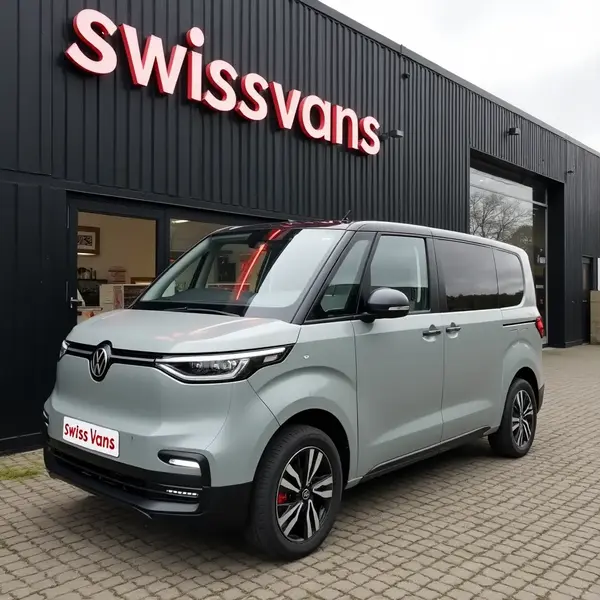
The transportation industry is experiencing a significant shift with the emergence of electric Luton vans. These innovative vehicles are revolutionizing the way businesses handle deliveries and transport goods, offering a cleaner and more sustainable alternative to traditional diesel-powered vans. As concerns about air pollution and carbon emissions continue to grow, electric Luton vans are gaining traction among companies looking to reduce their environmental impact while maintaining efficiency in their operations.
From established manufacturers like Mercedes-Benz and Ford Transit to newer players in the market, a wide range of electric Luton vans is now available for sale. These vehicles boast impressive features and capabilities, often surpassing their conventional counterparts in terms of performance and cost-effectiveness. This article will explore the evolution of electric Luton vans, their environmental benefits, key features, cost considerations, real-world case studies, and the future outlook for this rapidly advancing sector of the transportation industry.
The Evolution of Electric Luton Vans
Brief history
The evolution of electric Luton vans has its roots in a rich history of commercial vehicle manufacturing. Luton, a town in Bedfordshire, England, has been at the forefront of this transformation. The Luton Plant which doesnt build electric Vauxhall Movano Vans plant, opened in 1905, has been home to Vauxhall models for more than a century. In 1932, the first commercial vehicles were assembled at this facility, marking the beginning of a long-standing tradition in van production.
The journey of Luton vans took a significant turn in 2001 when the production of the Vivaro began. This model has recently undergone major enhancements as part of a wider refresh of the entire Stellantis light commercial vehicle line-up. The plant has also expanded its production to include sister Stellantis models for Peugeot, Citroën, Opel, and Fiat Professional, solidifying its position as a key player in the commercial vehicle market.
Key technological advancements
The transition to electric Luton vans has brought about remarkable technological advancements. Stellantis has announced its decision to manufacture electric vans in Luton, UK, from 2025. This move will see the production of fully electric versions of popular models such as the Vauxhall Vivaro Electric, Opel Vivaro Electric, Peugeot E-Expert, Citroën ë-Dispatch, and Fiat Professional E-Scudo in both right and left-hand drive configurations.
These electric vans boast impressive specifications. For instance, the New Vauxhall Vivaro Electric features a 75kWh battery coupled with a 100kW (136PS) electric motor, offering an impressive range of up to 217 miles (WLTP). Furthermore, its rapid charging capability allows for a 5-80% charge completion in just 45 minutes from a 100kW rapid charger.
Another notable advancement comes from the Watt Electric Vehicle Company (WEVC), which has revealed its production-ready eCV1 electric light commercial vehicle. This innovative vehicle features a new wide-body, ultra-low access height configuration, giving fleets the key attributes of a Luton conversion with the low access height of an air suspension vehicle, all in a more aerodynamic and efficient integrated body.
Market demand
The market demand for electric Luton vans has been growing, driven by the increasing focus on sustainability and environmental concerns. However, recent data shows some fluctuations in the uptake of these vehicles. In April, deliveries of new battery electric vans (BEVs) declined, with uptake falling to 861 units, down -42.4% compared to the previous year. This meant BEVs accounted for just 3.6% of all new LCV registrations, compared with 6.6% in April of the previous year.
Despite this temporary setback, the industry’s latest market outlook expects the UK’s new van market to grow by 3.3% to 353,000 units this year. BEV volumes are still expected to rise by 44.1% in 2024 to 29,000 units, indicating a positive long-term trend towards electrification in the commercial vehicle sector.
To support this transition, manufacturers are investing heavily in delivering more zero-emission models with competitive ranges and payloads, quiet operation, and high comfort levels. However, challenges remain, particularly in terms of charging infrastructure and taxation disparities. Addressing these concerns is crucial in incentivizing businesses to transition towards a net-zero fleet.
Environmental Benefits
Electric Luton vans are making significant strides in reducing the environmental impact of commercial transportation. These vehicles offer a range of benefits that contribute to a cleaner, greener future for urban areas and beyond.
Reduced emissions
One of the most notable advantages of electric Luton vans is their zero tailpipe emissions. Unlike traditional diesel or petrol-powered vehicles, electric vans do not produce harmful exhaust gasses. This characteristic has a substantial impact on reducing air pollution, particularly in densely populated urban areas where air quality is a major concern. The absence of tailpipe emissions means these vehicles do not release carbon dioxide (CO2) or nitrogen oxides (NOx) into the atmosphere, which are known contributors to climate change and respiratory issues.
Improved air quality
The adoption of electric Luton vans has a direct and positive effect on air quality. By eliminating the release of particulate matter and other pollutants associated with conventional fuel combustion, these vehicles help create cleaner and healthier urban environments. This improvement in air quality has far-reaching benefits for public health, potentially reducing the incidence of respiratory diseases and other health issues related to air pollution.
In recognition of their environmental benefits, electric vans are often exempt from charges in Ultra Low Emission Zones (ULEZ) and congestion charge areas. For instance, in London, businesses can save up to £27.50 per day per vehicle by using electric vans, which are not subject to these charges. This financial incentive further encourages the adoption of electric vehicles in urban areas, contributing to improved air quality on a larger scale.
Lower carbon footprint
Electric Luton vans play a crucial role in reducing the overall carbon footprint of commercial transportation. While it’s true that the source of electricity used to charge these vehicles can impact their overall environmental benefit, the increasing share of renewable energy in the power grid is enhancing their green credentials. For example, as of Q1 2021, the UK’s energy mix included 37.3% renewable sources, with plans to increase this proportion further.
The University of Bedfordshire’s experience with electric vans demonstrates the tangible environmental benefits of these vehicles. Since 2012, their electric vans have traveled 33,171 miles, resulting in a substantial decrease in carbon dioxide emissions per mile compared to diesel equivalents. This real-world example highlights the potential for significant carbon footprint reduction when businesses transition to electric fleets.
Electric Luton vans are particularly effective in addressing the environmental challenges of “last mile” deliveries. Companies like Fruit 4 London, which delivers fruit to over 500 offices in London daily using electric vehicles, showcase how these vans can contribute to sustainable urban logistics. By utilizing electric vans for these short-distance, high-frequency deliveries, businesses can significantly reduce their environmental impact while maintaining operational efficiency.
The adoption of electric Luton vans not only benefits the environment but also enhances a company’s reputation. Using these vehicles demonstrates a commitment to sustainability and environmental responsibility, which can increase goodwill among customers and stakeholders. As more businesses recognize the environmental and operational advantages of electric vans, their adoption is likely to accelerate, further contributing to cleaner, greener cities and a more sustainable future for commercial transportation.
Features and Capabilities
Electric Luton vans are revolutionizing the commercial vehicle industry with their impressive features and capabilities. These vehicles offer a range of benefits that make them increasingly attractive to businesses looking to reduce their environmental impact while maintaining operational efficiency.
Battery Range
The battery range of electric Luton vans has seen significant improvements in recent years. For instance, the Vauxhall Vivaro-e, one of the best-selling electric vans, offers a range of up to 217 miles (WLTP) with its 75kWh battery. This range is substantial for most daily operations, especially for urban and suburban deliveries.
However, it’s important to note that real-world range can differ from official figures. Factors such as payload, driving conditions, and weather can impact the actual range. For example, the Renault Master ZE provides an estimated range of 75 miles in summer and 50 miles in winter, accounting for payload and poor driving conditions. This more conservative estimate helps fleet managers plan their operations more accurately.
Payload Capacity
One of the key considerations for businesses switching to electric vans is payload capacity. Due to the weight of the battery packs, electric vans typically have a slightly lower payload capacity compared to their diesel counterparts. However, the difference is becoming less significant as technology advances.
For example, the Vauxhall Vivaro-e offers a payload of up to 1226kg, compared to 1458kg for the highest capacity diesel Vivaro. This represents a relatively small penalty of 232kg for the fully electric van. In the case of the Renault Master ZE, the 3.5t model can carry up to 1,490kg as a panel van, while the platform cab offers 1,740kg before conversion.
It’s worth noting that the actual load area dimensions are generally unaffected by the electric powertrain, as the batteries are typically stored below the load floor. This means businesses can maintain their cargo space while benefiting from zero-emission operations.
Charging Infrastructure
The charging infrastructure for electric Luton vans is a critical aspect of their practicality. Most charging is done overnight at depots, which allows for convenient and cost-effective refueling. However, public charging networks are also expanding to support longer journeys and opportunity charging.
Charging times vary depending on the charger type. For instance, the Renault Master ZE can be fully charged in six hours using a 7kW Wallbox charger. However, charging from a regular domestic socket can take up to 17 hours. It’s important to note that unlike some electric cars, many electric vans do not offer DC rapid charging options, which can limit their flexibility for long-distance travel.
As the adoption of electric vans increases, the charging infrastructure is expected to grow significantly. Projections suggest that the global number of public charging points could exceed 15 million by 2030, a four-fold increase from 2023 levels. This expansion will be crucial in supporting the widespread adoption of electric commercial vehicles and ensuring their practicality for a wide range of business operations.
Cost Considerations
Initial investment
The adoption of electric Luton vans presents a significant upfront cost for businesses. Electro-mobility technology, still in its infancy, relies on expensive components, particularly batteries. As a result, electric vans typically come with a higher price tag compared to their diesel counterparts. The price difference can be substantial, potentially amounting to thousands of pounds between a diesel van and its electric equivalent.
Stellantis, the owner of Vauxhall, has announced a £100 million investment to produce electric vans at its Luton plant. This investment will enable the manufacturing of models such as the Citroën ë-Dispatch, Peugeot e-Expert, and Vauxhall Vivaro-e. While this move safeguards 1,100 jobs and creates an additional 100 roles, it also reflects the substantial initial costs associated with transitioning to electric vehicle production.
Operating costs
Despite the higher initial investment, electric Luton vans offer significant advantages in terms of operating expenses. One of the most compelling benefits is the reduced fuel costs compared to diesel vans. For instance, charging the 75kWh version of the Vivaro-E costs approximately 28p/kwh and provides around 200 miles of range. In contrast, a diesel van returning 47mpg would cost at least £37 to fill (at 191p-per-liter) for a similar range, resulting in substantial long-term savings.
Maintenance costs are another area where electric vans for sale shine. With fewer moving parts than diesel vehicles, they require less maintenance and servicing. The absence of oil changes and exhaust system repairs further reduces ongoing expenses. Additionally, electric vans are exempt from Vehicle Excise Duty (road tax) until April 2025, providing another avenue for cost savings.
Citroen claims that its Berlingo Electric costs only 2-3p per mile to drive on average, which translates to less than £2 per 40 miles. This significantly lower cost per mile, combined with minimal maintenance requirements, makes electric vans an increasingly attractive option for businesses.
Government incentives
To encourage the adoption of electric commercial vehicles, the UK government has introduced various incentives. The Plug-In Van Grant (PIVG), launched in 2012, helps bridge the price gap between ultra-low emission vans and diesel vans. This grant will continue until at least the financial year 2022 to 2023.
For small vans (gross vehicle weight less than 2500kg), the grant covers 35% of the purchase price, up to a maximum of £2,500. Large vans (gross vehicle weight between 2500kg and 4250kg) are eligible for a 35% discount, up to a maximum of £5,000. These discounts are applied directly at the point of sale, with no need for customers to go through a separate application process.
The Workplace Charging Scheme (WCS) is another initiative that supports businesses in transitioning to electric vehicles. It covers up to 75% of the total cost of purchasing and installing EV charge points, capped at a maximum of £350 per socket, for up to 40 sockets per applicant.
These incentives, combined with exemptions from emission-based charges in urban areas, make electric Luton vans increasingly financially attractive to businesses, especially those operating in cities with strict environmental regulations.
Case Studies
Successful Implementations
The adoption of electric Luton vans has gained significant traction among businesses seeking to reduce their environmental impact and operational costs. Vauxhall, a leading manufacturer in this sector, has announced plans to commence production of its Vivaro Electric model at its Luton manufacturing facility from the first half of 2025. This move will make Luton the second Stellantis plant in the UK to manufacture electric vehicles, contributing to the growing demand for medium-sized electric vans.
The Luton plant will produce not only the Vauxhall Vivaro Electric but also equivalent models from other Stellantis brands, including the Opel Vivaro Electric, Peugeot E-Expert, Citroën ë-Dispatch, and Fiat Professional E-Scudo. These vehicles will be manufactured in both right and left-hand drive configurations, primarily for the UK market but with the capability to export to left-hand drive markets as well.
User Experiences
G.Network, a full-fiber broadband provider serving London, has embraced electric vans to navigate the city’s ultra-low emission zone (ULEZ). The company purchased one hundred Maxus eDeliver 3 and eDeliver 9 vans last year. Aaron Cartey, Fleet Manager at G.Network, emphasized the importance of working safely and sustainably while connecting homes and businesses to their fiber network. He stated, “Our fleet is a key part of our carbon reduction plan, which not only improves our business productivity but the customer experience of the Londoners we serve.”
Another notable example is DPD UK, a parcel delivery company with more than 10,000 vehicles operating in the region. Maxus supplied 750 eDeliver vans to DPD in 2021, showcasing the growing adoption of electric vans in the logistics sector.
Performance Metrics
The performance of electric Luton vans has been a key factor in their increasing popularity. The Renault Master ZE, for instance, offers a payload capacity of up to 1,490kg as a panel van in its 3.5t version, while the platform cab provides 1,740kg before conversion. This capacity makes it suitable for a wide range of applications, including Low Loaders, tippers, and Luton box vans.
Range is a crucial metric for electric vans. The Master ZE has an official range of around 124 miles. However, Renault provides more realistic estimates based on actual driving data: 75 miles in summer and 50 miles in winter, accounting for factors such as payload and driving conditions.
Cost considerations also play a significant role in the adoption of electric vans. While the initial investment may be higher, businesses can benefit from lower running costs. For example, Citroen claims that its Berlingo Electric costs only 2-3p per mile to drive on average, translating to less than £2 per 40 miles. This significant reduction in operational costs, combined with lower maintenance requirements, makes electric vans an increasingly attractive option for businesses looking to optimize their fleet expenses while meeting sustainability goals.
Future Outlook
Upcoming Models
The electric Luton van market is set for significant expansion with several manufacturers introducing new models. Stellantis has announced that its Luton production plant will begin manufacturing medium-size electric vans in spring 2025. This includes the Vauxhall Vivaro Electric, Opel Vivaro Electric, Peugeot E-Expert, Citroën ë-Dispatch, and Fiat Professional E-Scudo. These vehicles will be produced in both right-hand and left-hand drive configurations, primarily for the UK market but with export capabilities.
The Watt Electric Vehicle Company (WEVC) has revealed its production-ready eCV1 electric light commercial vehicle. This model features a new wide-body, ultra-low access height configuration, offering the attributes of a Luton conversion with the low access height of an air suspension vehicle. The eCV1 also boasts a unique central driving position, allowing safer kerbside exit for operators.
Technological Improvements
Advancements in battery technology are driving the evolution of electric Luton vans. Manufacturers are working on making lithium-ion batteries lighter and more efficient, allowing for greater energy storage in compact frames. This results in increased range and improved efficiency for electric vans.
The industry is also exploring alternative power sources. Vauxhall plans to launch a hydrogen fuel cell large van in right-hand drive in early 2025, addressing capabilities that battery electric vehicles (BEVs) cannot cover.
Charging infrastructure is rapidly expanding, with 55,301 electric vehicle charging points across the UK as of January 2024. This includes 10,541 rapid or ultra-rapid charging devices, representing a 46% increase since January 2023.
Market Projections
The electric van market is expected to continue its growth trajectory. Stellantis accounted for 30.4% of the van share in Europe in 2023 and dominated nearly half of the UK’s electric van sales. The Vauxhall Vivaro Electric was the best-selling electric van in the UK last year.
As battery technology improves, electric vans are achieving ranges of over 250 miles on a single charge, making them both environmentally friendly and economically efficient. This increased range, coupled with lower maintenance costs, is likely to drive further adoption among businesses.
The future of electric Luton vans also includes advancements in autonomous driving features. While current models like the Maxus eDeliver 9 offer Level 2 autonomy, future electric vans are expected to progress towards higher levels of autonomy, potentially reaching SAE Level 5, where vehicles can operate without a driver.
Conclusion
The rise of electric Luton vans is causing a revolution in the commercial vehicle industry, offering a greener and more cost-effective alternative to traditional diesel-powered vans. These vehicles have a significant impact on reducing emissions and improving air quality in urban areas, while also providing businesses with substantial long-term savings in operational costs. The ongoing advancements in battery technology, coupled with expanding charging infrastructure, are addressing initial concerns about range and practicality, making electric vans an increasingly viable option for a wide range of business operations.
Looking ahead, the future of electric Luton vans seems bright, with manufacturers investing heavily in new models and technological improvements. The growing adoption of these vehicles by businesses, supported by government incentives and stricter environmental regulations, points to a shifting landscape in commercial transportation. As battery technology continues to improve and costs decrease, electric Luton vans are set to play a crucial role in shaping a more sustainable and efficient future for urban logistics and delivery services.
FAQs
There are no questions and answers provided for this topic. Please provide details or questions you would like to know about the rise of electric Luton vans and the green revolution in transportation.