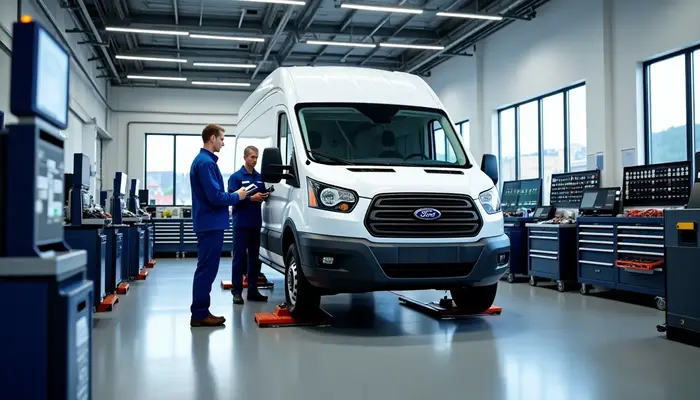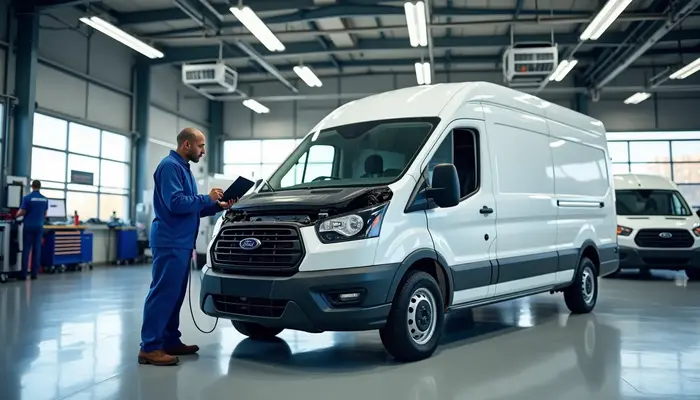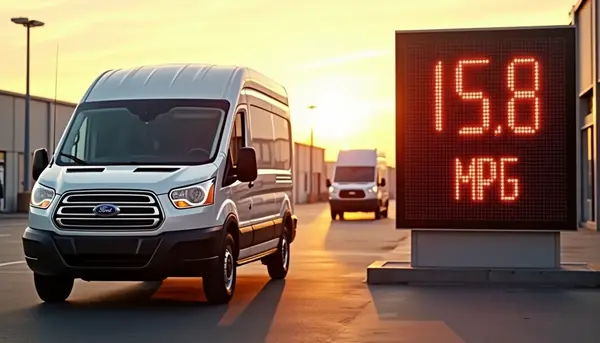
The electric vans market is experiencing rapid growth as businesses seek sustainable transportation solutions. With rising fuel costs and increasing environmental concerns, companies are turning to electric vans to reduce their carbon footprint and operating expenses. Ford, a leader in the automotive industry, has introduced a range of electric vans that are gaining attention for their potential to revolutionize commercial fleets. Source
Understanding the electric van cost and return on investment is crucial for businesses considering this transition. This article explores Ford’s electric van lineup, analyzing the initial investment, total cost of ownership, and projected ROI. It also examines the environmental benefits and impact on corporate sustainability. By delving into these aspects, fleet managers and business owners can make informed decisions about incorporating electric vans into their operations.
Understanding Ford’s Electric Van Lineup
Ford has introduced a range of electric vans to meet the diverse needs of businesses seeking sustainable transportation solutions. The lineup includes the E-Transit and E-Transit Custom, both designed to offer zero-emission alternatives without compromising on capability or versatility.
E-Transit Models Electric Van Cost
The E-Transit is available in 25 different versions, providing businesses with a wide array of options to suit their specific requirements. These versions include:
- Three lengths: L2 (Medium Wheelbase), L3 (Long Wheelbase), and L4 (Long Wheelbase Extended Length)
- Two heights: H2 (Medium Roof) and H3 (High Roof)
- Three different weights
- Chassis cab and double-cab-in-van options
The E-Transit offers five different sizes of panel van:
- L2 length in H2 and H3 heights
- L3 length in H2 and H3 heights
- L4 length in H3 height only
For businesses looking for a more compact option, Ford has introduced the E-Transit Custom. This all-new model is a zero-emissions version of the versatile Transit Custom van, designed to outsmart day-to-day challenges and maximize uptime.
Range and Charging Capabilities Electric Van Cost
The E-Transit comes with two battery options to accommodate different operational needs:
- Standard Range:
- Maximum range: 166-196 miles
- DC fast charging (115 kW): 10-80% in approximately 37 minutes
- Extended Range:
- Maximum range: 211-249 miles
- DC fast charging (180 kW): 10-80% in approximately 28 minutes
The E-Transit Custom offers a targeted range of 163-209 miles, making it suitable for various business applications.
Charging the E-Transit is convenient, with a grille-mounted charge socket for easy access. At home, a Ford Connected Wallbox can fully charge the vehicle from 0-100% in 11.5 hours. For on-the-go charging, the BlueOval™ Charge Network provides access to over 300,000 public charge points across Europe.
Payload and Cargo Space Electric Van Cost
The E-Transit maintains the same loadspace dimensions as its diesel counterpart, ensuring businesses can transport the same size items without compromise. Key features include:
- Up to 15.1 cubic meters of secure load space
- Load floor length of up to 4,256 mm (in the L4 variant)
- Easy access via sliding side door or full-height rear doors with built-in rear bumper step
Payload capacities vary depending on the model:
- E-Transit: Maximum payload of 1,745 kg (Standard Range) and 1,484 kg (Extended Range)
- E-Transit Custom: Maximum gross payload of 1,088 kg (L1H1 model)
The E-Transit Single Chassis Cab offers a maximum payload of 2,090 kg, making it suitable for heavy-duty applications.
To further enhance productivity, the E-Transit features Pro Power Onboard, an innovative system that provides up to 2.3 kW of power for tools or conversions like refrigeration, eliminating the need for a separate generator.
By offering a diverse range of electric vans with varying capacities, ranges, and features, Ford has positioned itself to meet the evolving needs of businesses transitioning to electric fleets. The E-Transit and E-Transit Custom provide options for companies looking to reduce their carbon footprint while maintaining the functionality and reliability they expect from Ford vehicles.
Initial Investment and Purchase Costs
The initial investment for Ford electric vans represents a significant consideration for businesses transitioning to sustainable transportation solutions. While the upfront costs may be higher compared to traditional diesel vans, various factors contribute to the overall financial picture.
Upfront Pricing
The cost of Ford’s electric vans varies depending on the model and specifications. The E-Transit, Ford’s flagship electric van, starts at just under £45,000 excluding VAT for the Trend trim. This price point positions it slightly higher than some competitors, such as the eVito and Stellantis vans, which start at less than £40,000 for smaller battery variants with reduced range.
For businesses seeking additional features, Ford offers several trim levels:
- Limited trim: An extra £1,800 above the base price provides LED lights, climate control, and body-colored panels.
- Sport model: This variant includes a bodykit and a higher-powered electric motor.
- MS-RT model: The top-tier option, priced at more than £60,000, offers enhanced driving dynamics, the most powerful electric motor, and a premium visual package including sporty alloys and a distinctive double-spoiler.
Government Incentives and Grants Electric Van Cost
To encourage the adoption of electric vehicles, the UK government has implemented various incentives that can significantly reduce the initial investment for businesses:
- Plug-in Van Grant (PIVG): Launched in 2012, this grant helps bridge the price gap between ultra-low emission vans and diesel vans. It has been extended to include trucks (heavy goods vehicles) since 2016.
- Grant Discounts:
- Small vans (less than 2,500 kg gross vehicle weight): Eligible for a 35% discount, up to a maximum of £2,500.
- Large vans (between 2,500 kg and 4,250 kg gross vehicle weight): Eligible for a 35% discount, up to a maximum of £5,000.
- Small trucks: Eligible for a 20% discount, up to a maximum of £16,000.
- Large trucks: Eligible for a 20% discount, up to a maximum of £25,000.
To qualify for these grants, vans must have CO2 emissions of less than 50g/km and be able to travel at least 96km (60 miles) without any emissions.
It’s important to note that these grants are applied directly at the point of sale, simplifying the process for buyers. Dealers and manufacturers handle the application process, making it seamless for customers to benefit from the discounts.
Leasing vs. Buying Options Electric Van Cost
Businesses have several options when it comes to acquiring Ford electric vans:
- Leasing: This option allows companies to use the vehicle for a fixed period, typically with lower monthly payments than a loan. Leasing often includes maintenance costs and provides the flexibility to upgrade to newer models at the end of the term. It’s an attractive choice for businesses that prefer to have access to the latest technology without the long-term commitment of ownership.
- Hire Purchase: Ford offers E-Transit Hire Purchase deals with low deposit options and flexible repayment terms. This arrangement allows businesses to eventually own the vehicle after completing all payments.
- Outright Purchase: For companies preferring full ownership, Ford provides the option to buy the E-Transit outright. Pricing is available on application, and this option offers complete control over the vehicle.
- Finance Lease: This option combines elements of leasing and purchasing, offering low deposits and flexible repayment options. It’s 100% tax-deductible, making it an attractive choice for many businesses.
To assist businesses in their transition to electric vehicles, Ford has introduced the E-Transit Flexibility program. This initiative allows customers to review their E-Transit experience within the first six months of the contract, offering the option to continue with the current arrangement or return the vehicle without an early termination fee.
When considering the initial investment and purchase costs of Ford electric vans, businesses should factor in the potential for VAT reclamation. VAT-registered businesses can reclaim VAT on vehicles used for commercial purposes, further reducing the overall cost of acquisition.
Total Cost of Ownership (TCO) Analysis
When evaluating the business case for Ford electric vans, a comprehensive Total Cost of Ownership (TCO) analysis reveals significant long-term benefits despite higher initial costs. This analysis encompasses various factors that contribute to the overall financial picture of operating electric vans compared to their diesel counterparts.
Fuel Savings Electric Van Cost
One of the most immediate and substantial benefits of transitioning to electric vans is the reduction in fuel costs. Electric vans have proven to be considerably more cost-effective to run than diesel or petrol vans due to the lower cost of electricity per mile. On average, an electric van costs 2-3p per mile to run, while a standard diesel-fueled van costs around 10p per mile. This difference can lead to substantial savings over time.
To illustrate this point, consider a comparison between a diesel van and its electric counterpart over a 100-mile journey:
- A diesel CITROEN Berlingo Crew Van would cost approximately £9,059 in fuel over a 12-month period.
- The same distance in an electric CITROEN e-Berlingo Crew Van would cost about £2,139.
This comparison demonstrates a potential saving of up to £19 per 100-mile journey, which can accumulate to significant amounts for businesses with extensive mileage requirements.
Maintenance Cost Reduction Electric Van Cost
Electric vans have a distinct advantage when it comes to maintenance costs. The simplicity of their design, with fewer moving parts compared to internal combustion engines, results in lower wear and tear and reduced maintenance requirements. Key points to consider include:
- Electric drivetrains have far fewer components that can malfunction, leading to lower overall maintenance costs.
- Regenerative braking systems in electric vans recycle energy and reduce wear on brake components, resulting in less frequent brake maintenance.
- Research indicates that electric vehicles cost at least 30% less to service and maintain than traditional vehicles.
Real-world data from fleet management companies supports these claims. For instance, Rivus reports that overall service, maintenance, and repair (SMR) costs for fully electric light commercial vehicles (LCVs) are 20% lower than for internal combustion engine (ICE) equivalents, with service costs alone being 65% lower.
However, it’s important to note that the extent of these savings can vary depending on the specific model. Data from Epyx shows that while some electric vehicles offer substantial SMR savings over their petrol and diesel equivalents, this cannot be assumed for all models.
Insurance and Tax Benefits
Electric vans offer several financial advantages in terms of insurance and taxation:
- Road Tax Exemption: Fully electric vans producing 0g/km of CO2 are currently exempt from Vehicle Excise Duty (road tax) until April 2025.
- Capital Allowances: As of April 2021, businesses can claim 100% of the cost of new and unused zero-emission vans against taxable profits in the first year of purchase, resulting in a 19% corporation tax saving in 2022.
- Benefit-in-Kind (BIK) Rates: The BIK rate for electric vans has been reduced to zero, matching that of electric cars, to further incentivize adoption.
- Congestion Charge and ULEZ Exemptions: Electric vans are exempt from congestion charges and Ultra Low Emission Zone (ULEZ) fees in applicable areas.
- VAT Reclamation: VAT-registered businesses can reclaim 100% of the VAT on lease and maintenance payments for electric vans.
These financial incentives, combined with fuel and maintenance savings, contribute to a compelling TCO case for Ford electric vans. While the initial investment may be higher, the long-term financial benefits and reduced environmental impact make electric vans for sale an increasingly attractive option for businesses looking to optimize their fleet operations and sustainability efforts.
Return on Investment (ROI) Projections
Calculating the return on investment for Ford electric vans requires a comprehensive analysis of various factors, including initial costs, operational savings, and long-term financial benefits. While the upfront investment may be higher compared to traditional diesel vans, the long-term financial advantages can be substantial.
Break-Even Point Calculation Electric Van Cost
To determine the break-even point for Ford electric vans, businesses need to consider the initial purchase cost, fuel savings, and reduced maintenance expenses. A comparison between the Peugeot Expert Diesel and its electric counterpart, the Peugeot E-Expert, provides insight into potential savings:
| Model | Monthly lease | Fuel | Maintenance | Total monthly cost |
|---|---|---|---|---|
| Diesel | £385.96 | £266.66 | £60.96 | £713.58 |
| Electric | £539.34 | £66.66 | £47.75 | £653.75 |
This comparison demonstrates that despite a higher monthly lease cost, the electric van offers lower fuel and maintenance expenses, resulting in a total monthly saving of £59.83. Based on these figures, businesses can expect to reach the break-even point relatively quickly, as the ongoing operational savings offset the higher initial investment.
Long-Term Savings Estimate Electric Van Cost
The long-term savings potential of Ford electric vans is significant. Fuel costs represent one of the most substantial areas of savings. Electric vans cost approximately 2-3p per mile to run, compared to around 10p per mile for diesel vans. Over a 100-mile journey, this translates to a potential saving of up to £19.
Charging strategies can further enhance these savings:
- Home or on-site charging: This method is generally cheaper, especially during off-peak hours when electricity rates are lower. Smart chargers and variable energy tariffs can maximize these savings.
- On-the-road rapid charging: While more expensive due to convenience and higher energy prices during peak hours, this option allows for quick top-ups during long journeys.
Maintenance costs also contribute to long-term savings. Electric vans have fewer moving parts, resulting in lower wear and tear and reduced maintenance requirements. Research indicates that electric vehicles cost at least 30% less to service and maintain than traditional vehicles. Some fleet management companies report that overall service, maintenance, and repair costs for fully electric light commercial vehicles are 20% lower than for internal combustion engine equivalents, with service costs alone being 65% lower.
Resale Value Considerations Electric Van Cost
The resale value of Ford electric vans is influenced by several factors that can positively impact the overall ROI:
- Battery technology and lifespan: Advances in battery technology are leading to longer-lasting and more efficient batteries, which can increase the resale value of electric vans.
- Brand reputation and warranty: Ford’s established brand and robust warranty offerings can positively influence resale values.
- Charging infrastructure: As the charging network expands, the demand for electric vans is likely to increase, potentially boosting resale values.
- Government incentives: Ongoing financial incentives for electric vehicle adoption can contribute to higher resale values by making these vehicles more attractive to potential buyers.
- Market demand: Growing awareness of environmental and economic benefits is expected to increase demand for electric vans, potentially supporting strong resale values.
To maximize resale value, businesses should focus on regular maintenance and proper battery care. Well-maintained electric vans with documented service histories are likely to command higher resale prices, as they represent lower-risk investments for potential buyers.
By considering these factors and projecting long-term savings, businesses can make informed decisions about incorporating Ford electric vans into their fleets, potentially realizing significant returns on their investment over time.
Environmental Benefits and Corporate Sustainability
Reduced Carbon Emissions
The adoption of Ford electric vans offers businesses a significant opportunity to reduce their carbon footprint and contribute to a cleaner environment. The transportation sector is one of the largest contributors to greenhouse gas emissions, primarily due to gasoline-powered vehicles. By transitioning to electric vans, companies can substantially decrease their emissions and play a crucial role in combating climate change.
Electric vehicles (EVs) are an essential component in meeting global climate change goals, featuring prominently in mitigation pathways that aim to limit warming to well below 2°C or 1.5°C, in line with the Paris Agreement’s targets. In Europe, EVs are responsible for considerably lower emissions over their lifetime compared to conventional internal combustion engine vehicles.
The environmental benefits of electric vans are particularly pronounced in countries with low-carbon electricity generation. For instance, in the UK, emissions from electricity generation have fallen by 38% in just three years and are expected to decrease by more than 70% by the mid-to-late 2020s. This trend enhances the positive impact of electric vans purchased today throughout their operational lifetime.
Meeting Emission Standards
As governments worldwide tighten environmental regulations and introduce incentives to encourage cleaner transportation options, electric vans have become increasingly attractive to businesses. By adopting Ford electric vans, companies can align themselves with these regulations, avoiding potential fines and penalties while demonstrating their commitment to sustainability.
Recent data from the European Environment Agency shows that average CO2 emissions from new cars and vans registered in Europe continued to decrease in 2023, with a 1.4% reduction for cars and a 1.6% reduction for vans compared to 2022. This trend is largely attributed to the growing share of fully electric vehicles in the market.
The EU has set ambitious goals to reduce greenhouse gas emissions from transport by 90% by 2050 compared to 1990 levels. For all new cars and vans, the target is to achieve zero emissions from 2035 onwards. By investing in electric vans today, businesses are not only meeting current standards but also future-proofing their fleets against increasingly stringent regulations.
Enhancing Brand Image Electric Van Cost
Adopting electric vans can significantly enhance a company’s public image and brand reputation. As consumers become more environmentally conscious, they actively seek out brands that align with their values. When customers see electric vehicles on the road, they associate the brand with eco-friendliness and sustainability, creating a positive perception of the company.
This sustainable branding can attract new customers who are looking to support environmentally responsible businesses, giving companies a competitive edge in the market. By using electric vans, businesses demonstrate their commitment to social responsibility and their efforts to reduce air pollution, ultimately improving the overall health and well-being of local communities.
Companies that convert to electric vehicle fleets establish themselves as green and socially responsible brands striving to make a positive impact. This image leads to a good reputation and stronger customer loyalty. Businesses can leverage their commitment to electric vehicles as a unique selling point, featuring their eco-friendly practices prominently in marketing campaigns to attract environmentally-conscious consumers.
By investing in sustainable transportation solutions like Ford electric vans, companies not only reduce their environmental impact but also position themselves as forward-thinking, responsible members of society. This approach benefits both the business and the communities in which they operate, creating a win-win situation for corporate sustainability and environmental stewardship.
Conclusion Electric Van Cost
Ford’s electric vans are causing a revolution in the commercial vehicle sector, offering a blend of eco-friendliness and cost-effectiveness. The initial investment, while higher than traditional vans, is offset by substantial long-term savings in fuel and maintenance costs. What’s more, these vans play a key role in helping businesses meet emission standards and boost their green credentials, which has a positive impact on brand image and customer loyalty.
To wrap up, the shift to electric vans is more than just a trend – it’s a smart business move with wide-ranging benefits. From cutting operational costs to shrinking carbon footprints, Ford’s electric vans give companies a competitive edge in an increasingly eco-conscious market. As charging infrastructure continues to grow and technology advances, the case for adopting these vehicles becomes even stronger, paving the way for a cleaner, more sustainable future in commercial transportation.
FAQs Electric Van Cost
No FAQs are available for this topic at the moment. Please check back later for updates.