Exploring the Ford E-Transit Custom Range: How Far Can You Go?
The Ford E-Transit Custom range has sparked considerable interest in the electric vehicle market, revolutionizing the way businesses approach their transportation needs. This pure electric van offers a compelling solution for companies looking to reduce their carbon footprint and adapt to low emission zones while maintaining the utility and reliability of a traditional Ford Transit Custom. As businesses increasingly prioritize sustainability, understanding the driving range and capabilities of the Ford E-Transit Custom has become crucial for making informed fleet decisions.
This article delves into the real-world range of the Ford E-Transit Custom, examining factors that affect its performance and exploring strategies to maximize its driving distance. We’ll take a closer look at the Ford E-Transit Custom specs, including dimensions, payload capacity, and weight, to provide a comprehensive overview of this electric van’s capabilities. Additionally, we’ll discuss charging options and times, helping potential users gage the practicality of incorporating the E-Transit Custom into their daily operations. By the end, readers will have a clear understanding of how far they can go with the Ford E-Transit Custom and how to make the most of its electric powertrain. Source

Ford E-Transit Custom: An Overview
The Ford E-Transit Custom represents a significant step forward in the electric vehicle market, offering businesses a sustainable alternative to traditional vans without compromising on utility or reliability. This pure electric van maintains the proven formula of its combustion counterpart while incorporating innovative features to meet the evolving needs of modern businesses.
Key Features Ford E Transit Custom Range
The E-Transit Custom boasts several standout features that set it apart in the competitive mid-size electric van segment. At the heart of its design is a 64kWh battery pack, strategically placed under the floor to maximize cargo space. This thoughtful engineering ensures that the electric drivetrain does not impinge on the van’s carrying capacity, allowing it to maintain the same spacious interior as its diesel-powered sibling.
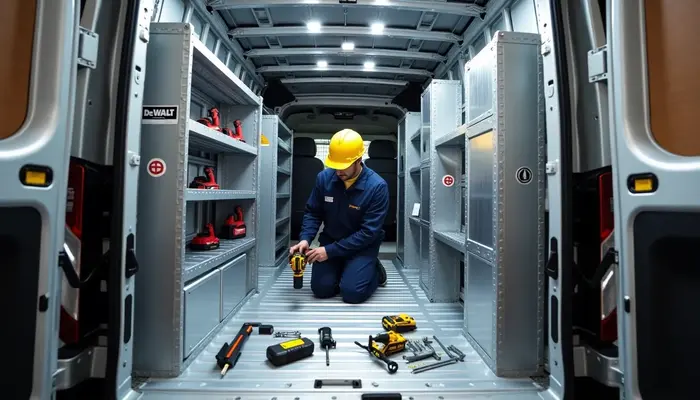
One of the most impressive aspects of the E-Transit Custom is its Pro Power Onboard system. This innovative feature transforms the van into a mobile 2.3kW generator, enabling users to power tools, lighting, or other equipment directly from the vehicle. This functionality adds a new dimension of versatility, making the E-Transit Custom an invaluable asset for various industries.
The van also comes equipped with a 13-inch touchscreen featuring Ford’s SYNC 4 software, providing drivers with an intuitive interface for navigation, communication, and vehicle management. Additional standard features include a rear-view camera and automatic air-conditioning, enhancing both safety and comfort. See all our electric vans
Available Models Ford E Transit Custom Range
Ford has designed the E-Transit Custom range to cater to a wide array of business needs, offering multiple trim levels and configurations:
- Trend: The entry-level trim, powered by a 134bhp rear-mounted motor.
- Limited: Adds 16-inch alloy wheels, electronically-adjustable heated seats, LED lighting, and Ford’s Parking Pack.
- Sport: Features exterior enhancements like stripes and larger alloy wheels, backed by a more powerful 215bhp motor.
- MS-RT: The top-tier model boasts 282bhp, an aggressive bodykit, and eye-catching paint options.
In terms of body styles, the E-Transit Custom offers remarkable flexibility:
- Regular panel van
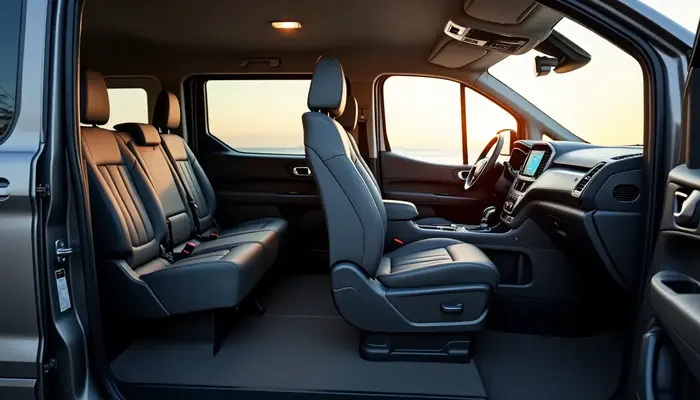
- Double-cab with six passenger seats
- Kombi with up to eight seats
- Multicab with a two-seat second row and L-shaped bulkhead
Customers can choose between two wheelbases: the standard length L1 or the extended L2. However, all models come with a fixed height of 1,968mm (H1 roof height).
Battery and Range Specifications
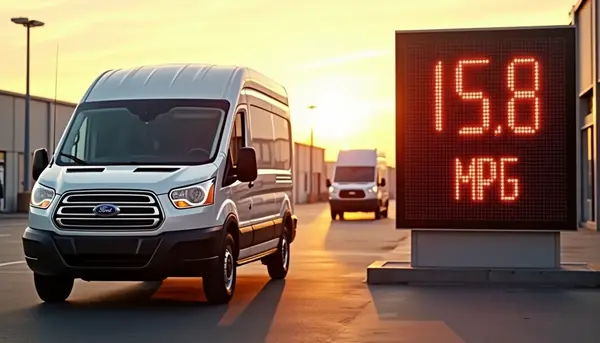
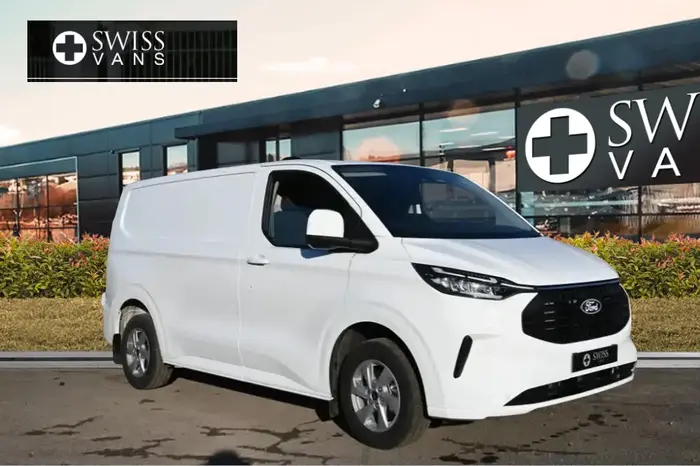
The E-Transit Custom’s 64kWh battery pack delivers an impressive official range of up to 209 miles on a single charge. Real-world testing has shown even more promising results, with some trials achieving an efficiency of 3.4 miles per kWh, translating to a potential range of 217 miles.
Charging capabilities are equally impressive. The E-Transit Custom supports fast charging at up to 125kW, allowing for a 10-80% charge in just 39 minutes. For quick top-ups, Ford’s testing demonstrated that a 10-minute charge could add approximately 50 miles of range. See all Ford Electric Vans
These specifications position the E-Transit Custom as a highly capable and practical electric van, suitable for a wide range of business applications. Its combination of ample range, fast charging, and versatile configurations make it a compelling choice for companies looking to electrify their fleets without sacrificing functionality or efficiency. See all electric vans for sale
Real-World Range Testing
The Ford E-Transit Custom’s real-world range performance has been put to the test in various driving conditions, providing valuable insights into its capabilities beyond the official figures. While Ford quotes an official range of 209 miles for the E-Transit Custom, actual performance can vary significantly based on factors such as driving style, payload, and environmental conditions. See all electric van lease deals
City Driving
In urban environments, the E-Transit Custom has shown impressive efficiency. During simulated delivery routes with frequent stops and starts, the van demonstrated its ability to maintain a reasonable range. However, these tests also revealed some challenges. In one trial, the van achieved 1.2 miles per kWh of battery consumption, translating to a range of approximately 81.6 miles. This lower-than-expected figure was partly attributed to the use of cabin heating in cold weather conditions, which significantly impacted efficiency due to the absence of a heat pump system.
It’s worth noting that around-town driving typically yields better results. Some users have reported achieving up to 250 km (approximately 155 miles) of range in city environments. This discrepancy highlights the impact of factors such as temperature and auxiliary power usage on the van’s overall range.
Highway Driving Ford E Transit Custom Range
Highway performance of the E-Transit Custom has been a pleasant surprise for many testers. In one comprehensive test, a fully loaded E-Transit (at maximum payload) achieved an efficiency of 1.4 miles per kWh on the highway. This translates to an estimated range of 95.2 miles, which is impressive considering the vehicle was carrying its maximum load.
Another test revealed highway consumption rates of around 35 kWh per 100 km, which is higher than the average for passenger electric vehicles but reasonable for a commercial van of this size and capacity. Based on these results, a conservative estimate for highway range would be around 180 km (approximately 112 miles) per charge.

Mixed-Use Scenarios
In mixed driving conditions, the E-Transit Custom’s range can vary significantly. One long-distance test involving a 450 km (280 mile) journey provided valuable insights. The driver found that charging to 80% typically provided about 200 km (124 miles) of range. After driving 130 km (81 miles), the remaining range would be between 40-60 km (25-37 miles). This real-world experience suggests that for longer trips, more frequent charging stops may be necessary than the official range figures might indicate.
It’s important to note that the E-Transit Custom’s efficiency can be influenced by various factors:
- Payload: Ford tests the van at 50% payload, but real-world usage often involves full loads, which can significantly reduce range.
- Weather conditions: Cold temperatures, in particular, can have a notable impact on battery performance and range.
- Driving style: Aggressive acceleration and high-speed driving can quickly deplete the battery.
- Auxiliary power usage: Features like cabin heating can draw considerable power, especially in colder climates.
Overall, while the E-Transit Custom may not always achieve its official range of 209 miles in real-world conditions, it has proven to be a capable and efficient electric van. For most urban and short-haul applications, its range should be more than sufficient, especially when drivers can take advantage of overnight charging at depots. However, for longer journeys or heavy-duty use, careful route planning and an understanding of the van’s real-world capabilities are essential to ensure successful operations.
Factors Affecting E-Transit Custom’s Range
The Ford E-Transit Custom’s range can vary significantly based on several factors. Understanding these elements is crucial for businesses and drivers to maximize the vehicle’s efficiency and plan their routes effectively.
Payload and Cargo Ford E Transit Custom Range
One of the most significant factors affecting the E-Transit Custom’s range is its payload. As with any vehicle, the heavier the load, the more energy is required to move it. For the E-Transit Custom, the difference in range between an empty and fully loaded van is approximately 10 to 20 percent. This variation is particularly important for businesses that regularly operate at or near maximum payload capacity.
The E-Transit Custom offers impressive payload capabilities, with a maximum gross payload of up to 1,745 kg for the L2 H2 425 series van with the standard 68 kWh battery. For the L3 H2 425 series van with the extended range 89 kWh battery, the maximum payload is 1,484 kg. It’s important to note that the actual payload capacity can vary based on the vehicle’s configuration and accessories.
Driving Style
The driver’s behavior behind the wheel has a substantial impact on the E-Transit Custom’s range. Aggressive acceleration and frequent braking consume more charge, reducing the overall distance the van can travel on a single charge. Efficient driving techniques, such as smooth acceleration and anticipating traffic to avoid sudden braking, can help maximize range.
One feature that aids in efficient driving is the regenerative braking system, which enables one-pedal driving. This technology is particularly beneficial in urban environments, where frequent stops are common. By using regenerative braking, drivers can recover energy that would otherwise be lost during deceleration, contributing to improved overall efficiency and range.
Weather Conditions Ford E Transit Custom Range
Environmental factors, particularly temperature, play a crucial role in the E-Transit Custom’s performance. Cold weather can significantly affect battery performance, reducing the overall range. Additionally, low temperatures often lead to increased power consumption for cabin heating, further impacting the vehicle’s range.
To address this challenge, Ford has implemented innovative solutions. The E-Transit Custom is the first electric vehicle to use vapor-injected heat pump technology for cabin climate control. This system, standard on all vehicles, is designed to deliver improved energy efficiency, helping to maintain optimal driving range even in challenging weather conditions.
For drivers looking to maximize range in cold weather, Ford recommends using the heated seats and windscreen instead of the high-voltage cabin heater. This approach can save energy and extend the vehicle’s range without compromising on comfort.
Other factors that can influence the E-Transit Custom’s range include:
- Route profile: Hilly terrain or routes with frequent stops can impact energy consumption.
- Vehicle maintenance: Proper upkeep, including tire pressure and regular servicing, can affect efficiency.
- Battery age and condition: Over time, battery capacity may decrease, affecting overall range.
- Use of auxiliary power: Features like the 2.3 kW Pro Power Onboard system, while useful for powering tools and equipment, can draw additional energy from the battery.
To help drivers and fleet managers navigate these variables, Ford provides tools like the FordPass Pro smartphone app, which allows users to track the current charge state on-the-go. This feature enables more effective route planning and charging management, helping to optimize the E-Transit Custom’s performance in real-world conditions.
Charging Options and Times
The Ford E-Transit Custom offers a range of charging options to suit various needs and scenarios. These options cater to different charging speeds and locations, providing flexibility for businesses and drivers.
DC Fast Charging
The E-Transit Custom supports DC fast charging up to 125 kW, allowing for rapid recharging during longer journeys or when time is of the essence. This capability enables a 10-80% recharge in approximately 39 minutes, making it highly efficient for quick top-ups during the workday. In lab testing, the system demonstrated impressive performance, delivering 82 km of range in just 10 minutes of charging.
For the standard range model with a 68 kWh battery, the E-Transit Custom can utilize a 115 kW DC charger. It’s important to note that actual charging times and speeds may vary depending on factors such as weather conditions, temperature, driving behavior, and the age and condition of the lithium-ion battery.
AC Charging
For regular charging needs, the E-Transit Custom comes equipped with an 11 kW AC three-phase onboard charger. This setup allows for a full battery recharge in about 6.7 hours, making it ideal for overnight charging at depots or extended periods of downtime.
The van also supports single-phase AC charging at a maximum rate of 7.4 kW. Using a 7 kW wallbox on a single-phase domestic supply, a full charge takes approximately 10 hours. This option is particularly suitable for home charging or locations where three-phase power is not available.
Workplace and Home Charging Solutions
Ford Pro has developed comprehensive charging solutions for both workplace and home environments, catering specifically to small and medium-sized enterprises (SMEs) in Europe. These solutions aim to simplify the electrification process for businesses adopting electric vans.
For home charging, Ford Pro offers an all-in-one solution that includes:
- A connected Ford Pro Home Charger
- Installation services
- Maintenance support
- A five-year warranty
This home charging system integrates with Ford Pro Telematics, simplifying driver reimbursement and compliance for office-based staff. Additionally, Ford Pro’s charging software allows users to schedule charging sessions to take advantage of off-peak energy tariffs, potentially reducing overall energy costs.
In the workplace, the E-Transit Custom can be conveniently charged upon arrival, ensuring the van is ready for its next shift. Public charging options are also available, with charging points often found at locations such as supermarkets and public car parks.
It’s worth noting that the E-Transit Custom uses a Type 2 connector for AC charging at home, work, or public charging points. For DC fast charging, it’s equipped with a CCS connector, providing versatility across different charging infrastructure.
The cost of charging can vary significantly between home, work, and public charging points. While specific costs are not provided, it’s generally understood that home charging tends to be the most cost-effective option, followed by workplace charging, with public rapid charging typically being the most expensive.
Overall, the Ford E-Transit Custom offers a flexible and comprehensive charging ecosystem, allowing businesses to tailor their charging strategy to their specific operational needs and available infrastructure.
Range Maximization Strategies
The Ford E-Transit Custom offers several strategies to maximize its range, ensuring that businesses can make the most of this electric van’s capabilities. By implementing these techniques, drivers can significantly extend the vehicle’s range and improve overall efficiency.
Eco-Driving Techniques Ford E Transit Custom Range
Adopting eco-driving techniques has a substantial impact on the E-Transit Custom’s range. One of the most effective methods is utilizing the van’s regenerative charging system. This feature automatically captures energy typically lost during deceleration and uses it to recharge the battery. Drivers can enhance this effect by selecting the ‘L’ mode on the rotary shifter, which intensifies regenerative braking and enables near one-pedal driving in stop-start traffic or when descending steep hills.
The E-Transit Custom also offers an Eco mode, accessible via the drive mode button below the touchscreen. This mode is designed to maximize efficiency and help extend battery life. Additionally, some fleet versions come with optional acceleration control, which limits acceleration to improve battery efficiency while still providing full power when the van is fully laden or towing.
Drivers should also be mindful of their driving style, as it has the most significant impact on range. Heavy acceleration and frequent braking consume more charge, so adopting a smoother driving style can lead to substantial energy savings.
Route Planning
Intelligent route planning is crucial for maximizing the E-Transit Custom’s range. The van’s intelligent range feature combines live data, including temperature and traffic conditions, with learned data about the driver’s style to provide accurate range calculations. This feature becomes more precise over time as it learns the driver’s behavior, allowing for more efficient route planning.
When planning longer journeys, drivers should consider the van’s DC fast charging capability. The E-Transit Custom can charge from 10% to 80% in just 39 minutes, making it possible to cover longer distances with minimal downtime. Strategically planning charging stops along the route can significantly extend the van’s effective range.
Load Management
Effective load management is essential for optimizing the E-Transit Custom’s range. The vehicle’s weight has a direct impact on energy consumption, with a fully loaded van using approximately 10-20% more energy compared to an empty one. To address this, the E-Transit Custom is equipped with sensors that gather information on the vehicle’s total weight and center of gravity. This data is used to optimize safety and driving performance, with safety systems calibrating continuously for maximum effectiveness.
To maximize range, businesses should aim to distribute weight evenly and avoid overloading the van. The E-Transit Custom’s new-from-the-ground-up platform is designed to deliver outstanding load-carrying capacity, allowing for efficient cargo management.
Another aspect of load management is the use of auxiliary power. The Pro Power Onboard feature, available on the E-Transit Custom, allows drivers to power work tools via three 2.3kW plug sockets without the need for an external generator. While this feature is incredibly useful, it’s important to note that it does consume battery power. For example, powering a 2kW table saw for three hours uses approximately 10% of the E-Transit Custom’s battery. Careful planning of power tool usage can help balance productivity with range preservation.
Lastly, managing the vehicle’s climate control can significantly impact range, especially in cold weather. To conserve energy, drivers should use the preconditioning feature while the van is still charging. This primes the battery and sets the cabin temperature, saving battery energy for driving. When on the road, using heated seats and the heated windscreen instead of the high-voltage cabin heater can help maximize range in cold conditions.
By implementing these range maximization strategies, businesses can ensure they get the most out of their Ford E-Transit Custom, balancing efficiency with productivity in their daily operations.
Conclusion
The Ford E-Transit Custom has proven to be a game-changer in the electric van market, offering a blend of practicality, efficiency, and innovation. Its impressive range, versatile charging options, and smart features make it a strong contender for businesses looking to electrify their fleets. The van’s ability to adapt to various driving conditions and its range of models cater to diverse business needs, showcasing Ford’s commitment to address the evolving demands of the commercial sector.
While the E-Transit Custom’s official range of 209 miles may vary in real-world conditions, the strategies to maximize its performance provide users with the tools to optimize their operations. From eco-driving techniques to smart route planning and load management, businesses can tailor their approach to get the most out of this electric van. As the automotive industry continues its shift towards electrification, the Ford E-Transit Custom stands as a testament to the potential of electric vehicles in commercial applications, paving the way for a more sustainable future in transportation.
FAQs
What is the driving range of the E-Transit Custom electric van?
The E-Transit Custom is equipped with a 64kWh battery pack that supports an official driving range of up to 209 miles, which is slightly better than its competitor, the Vivaro Electric, which offers a 204-mile range with a 68kWh battery due to its efficiency.
What is the estimated range for the Ford e-Transit on a single charge?
The e-Transit features a fully electric powertrain with a rear-wheel-drive motor and a 89kWh lithium-ion battery. This setup provides an estimated range of 159 miles for the Cargo Van low-roof models, ensuring reliable travel for various job sites.
How far can the Ford Transit electric travel on a full charge?
The all-new Ford Transit electric, with its enhanced features, offers an impressive all-electric driving range of approximately 163 to 209 miles. Additionally, it has a towing capability of up to 2.3 tons, making it a highly versatile and emission-free option.
What is the expected lifespan of a Ford Transit Custom in terms of mileage?
A Ford Transit Custom typically reaches its upper lifespan limit around 172,000 miles. The type of fuel used significantly influences the vehicle’s lifespan and overall durability.