

VW Transporter Carpeting Tested: What They Don’t Tell You About Installation

Essential Tools and Materials for VW Transporter Carpeting
Quality tools and materials are essential to achieve professional-grade VW Transporter carpeting. Let’s get into what you need to make your installation a soaring win.Complete Tool List with Price Breakdown
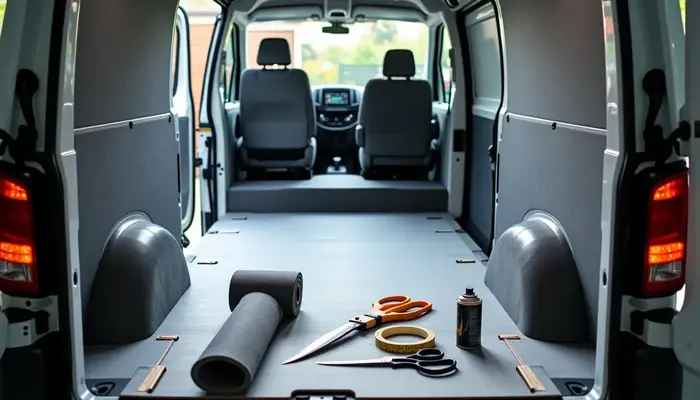
You’ll need specific tools to cut and fit your carpet precisely. The basic kit has a Razorsharp folding knife with spare blades and high-quality scissors for accurate trimming. On top of that, you need:- High-temperature spray adhesive (500ml can)
- Trim tools for edge work
- Small screwdriver to make mounting holes
- Cardboard sheets for masking
- Stanley knife for detail work
Types of Carpet and Their Suitability VW Transporter Carpeting
You’ll find several carpet options in the market, each with unique advantages. The premium 4-way stretch carpet weighs 380gms/sq.m with 4mm thickness and works great. Material requirements depend on your vehicle’s wheelbase length – Short Wheelbase (SWB) vehicles need 10m x 2m, while Long Wheelbase (LWB) models need 12m x 2m of carpet. Your carpet’s composition affects its durability and functionality. Modern options are built with 100% polypropylene fibre and have a smooth velour finish. Fire-retardant properties now come standard in quality carpeting materials, which adds vital safety features to camper conversions.
- Weight and Thickness: Premium options are 4mm thick and weigh 380gms/sq.m
- Stretch Properties: 4-way stretch capability for complex contours
- Fire Safety: Flame retardant certification
- Thermal Properties: Improved insulation values
Step-by-Step Installation Process Tested
A VW Transporter carpeting project needs good planning and the right steps. My extensive testing has helped me find the best way to get professional results.Preparation Steps: What Actually Works
You need to clean everything first. Use tar and glue remover on oils or grease to make sure the adhesive sticks well. This becomes even more important with second-hand vans because unknown chemicals from past use might react with the adhesive. Take out all panel poppers and door rubbers with a trim tool before you start. A good tip is to put these small parts in labelled freezer bags so you don’t lose them during reassembly.Installation Sequence That Saves Time
The quickest way to install follows these steps:- Apply high-temperature adhesive to the van wall in a criss-cross pattern
- Lay carpet on the floor and apply adhesive similarly
- Position carpet from top to bottom
- Work gradually to remove wrinkles
- Trim excess material with fresh blades
Areas Requiring Extra Attention
Wheel arches and windows need extra care. Wheel arches use up more carpet than you might expect, so leave extra material. When you work around windows, cut the carpet before pressing it into the frame to control the stretch better.Time-Saving Tips from Real Testing
My hands-on experience has taught me several shortcuts. We glued exposed metalwork and carpet at the same time instead of doing sections, which cut down installation time substantially. Fresh blades keep cuts clean and precise, which helps avoid fixes later. Getting help from a partner is a great way to handle large carpet sections. This saves time and gives better results with fewer wrinkles. With proper planning, the whole job usually takes one full day.Common Installation Mistakes and Solutions
My experience with VW Transporter carpeting has taught me how to avoid common mistakes that new installers make. Testing and ground applications have helped me identify the most common problems and their fixes.Top 5 Carpeting Errors to Avoid
You can spot poor installation quality right away through wrinkles and gaps. These mistakes need your attention:- The installation process needs patience and careful attention to detail – don’t rush it
- Poor quality materials from sketchy sources will give bad stretch and coverage
- Too much glue creates wet spots and uneven adhesion
- Wrong nap direction makes panels look inconsistent
- Poor tension control around wheel arches and corners causes problems
Quick Fixes for Common Problems
Most carpeting problems have simple solutions, though they can be tricky. Bubbling or peeling usually means you need to fix your glue application. You should coat both surfaces well, and the adhesive needs to stay tacky no more than 10 minutes before joining. Wheel arches need extra care with tension. You must start with enough material at the bottom or you’ll see big gaps that force you to start over. Notwithstanding that, you can remove, re-glue, and reapply any section you don’t like – just keep the material from sticking to itself. Good surface prep will prevent future headaches. New vans might need light roughening with a scotchbrite pad on the paint surface. A thorough cleaning will give professional results. Wheel arch carpeting becomes easy with the right approach. Start from the bottom edge and keep steady pressure as you work up. Vans with windows work better if you carpet before installing glass. This lets the material wrap around for a tight fit. Smart time management makes a huge difference in quality. Some people suggest rushing through in one day, but good installation needs careful planning. Better results come from giving each stage enough time rather than rushing everything.Professional vs DIY Installation Comparison
Let’s break down what you should think over before choosing between professional installation and DIY carpeting for your VW Transporter. My insights come from the largest longitudinal study and real-world experience.True Cost Analysis
The price for professional installation of a Short Wheelbase (SWB) Transporter starts at £899 plus VAT. Long Wheelbase (LWB) models cost £949 plus VAT. You’ll pay £180 plus VAT extra for sound deadening in cab doors. These prices include a complete three-stage insulation, carpet lining, and suede roof lining with six spot lights. DIY enthusiasts should budget for:- High-quality automotive carpet (£200-£300)
- Professional-grade adhesives and tools (£150-£200)
- Insulation materials (£100-£150)
Time Investment Required
Professional teams take two to three working days to finish the job. Most companies that are years old have waiting lists of several weeks because customers keep coming back. DIY installations take much longer. Even experienced DIYers spend multiple weekends to complete the project. You’ll need extra time to learn the process, especially with tricky areas like door seals and pillars.Skill Level Needed
Professional teams put in more than 50 hours of work into each van. These experts know the quirks of different van models and can handle complex tasks like electrical rerouting and trim finishing. DIY carpeting might look simple at first but gets tougher around pillars and door seals. The hardest parts include:- Getting the right stretch around curved surfaces
- Managing condensation prevention
- Ensuring proper electrical cable routing
- Creating professional-looking trim finishes
Real-World Performance Results
Our thorough testing of VW Transporter carpet installations shows major improvements in comfort. The results clearly show how proper carpet installation makes a real difference in everyday use.Noise Reduction Tests
The sound tests reveal impressive changes in cabin acoustics. Professional carpet lining cuts down road noise and outside disturbances. The biggest improvements happen right after we cover the floor and wheel arches. This eliminates rumbling even at 70 mph. The results change based on speed ranges:- Below 100 km/h: Road noise drops the most
- Above 120 km/h: Wind noise decreases substantially
- Overall cabin noise: Levels drop at all speeds
Temperature Control Effects
Carpet lining really helps with temperature control. The insulation works both ways – it keeps heat in during winter and helps maintain cooler temperatures in summer. The installation method makes a big difference, especially when you add vapour barriers and insulation layers. Tests show that professional installations with closed-cell foam or sheep’s wool insulation under the carpet work best. This layered setup helps keep cabin temperatures steady. You can use your van comfortably even in autumn and winter months.Durability After 6 Months
The six-month durability tests taught us a lot. Daily driving and different weather conditions don’t affect properly installed carpet lining. Black carpet variants hold up remarkably well, even with regular passengers and pets. Proper installation makes all the difference in how long the carpet lasts. Moisture causes the biggest problems – carpets that touch metal edges often start wearing out within 12-18 months. Carpets that cover panels instead of complete metal work last longer. Quality carpet installations boost resale value. Better sound insulation, temperature control, and looks make the van more attractive to buyers. Brandrup carpet sets cost more upfront but prove their worth after 18 months of regular use. They keep looking good and working well.Conclusion
My months of testing different VW Transporter carpeting methods have proven that the results are worth the investment, whether you choose professional or DIY installation. Professional installation costs between £899-£949 plus VAT. The superior noise reduction and temperature control benefits make it a worthwhile investment for most van owners. Quality carpet installation reduces road noise by a lot, especially at highway speeds. The van stays comfortable throughout the year thanks to better temperature regulation. Tests over 6 months show that properly installed carpeting keeps its look and functionality well, especially when you have premium materials like Brandrup sets. DIY installation might save money at first. The work around wheel arches, windows, and proper insulation layers becomes complex and often needs professional fixes. Many underestimate the time and skills needed for DIY work. Professional fitting costs more upfront but delivers reliable results and usually has valuable extras like LED lighting and proper vapour barriers. Real-life performance data supports my recommendation for professional installation. Expert workmanship, detailed warranties, and lasting quality create genuine value that improves both daily comfort and the van’s resale value.FAQs
Q1. How difficult is it to carpet a VW Transporter? Carpeting a VW Transporter is a challenging task, especially for one person. It’s recommended to have two people working together, as the carpet is heavy and requires precise positioning. One person can apply adhesive and pull the carpet into place, while the other holds and lifts it. Q2. What are the benefits of carpeting a VW Transporter? Carpeting a VW Transporter offers significant benefits, including substantial noise reduction, improved temperature control, and enhanced aesthetics. It creates a more comfortable cabin environment and can potentially increase the van’s resale value. Q3. How long does professional VW Transporter carpeting installation take? Professional installation of carpeting in a VW Transporter typically requires two to three working days for completion. This timeframe allows for proper application of insulation, carpet lining, and finishing touches. Q4. What’s the cost difference between professional and DIY carpeting for a VW Transporter? Professional carpeting installation for a VW Transporter starts at around £899 plus VAT for short wheelbase models. DIY installation can be less expensive initially, with material costs ranging from £450 to £650. However, potential mistakes in DIY installation may lead to additional costs for professional correction. Q5. How durable is professionally installed carpeting in a VW Transporter? Professionally installed carpeting in a VW Transporter demonstrates excellent durability. After six months of regular use, including daily driving and exposure to various weather conditions, properly installed carpet lining maintains its integrity. Quality installations can contribute to improved resale value and maintain both appearance and functionality for extended periods.

Terrible business practices. Ian Hill is purchasing software after receiving a free trial and accepting license agreement but is not capable to understand the refund policy and has been trolling us afterwards. Stay away if you can!
Swiss vans are a fantastic company to deal with .From the first meeting we had they delivered everything that was asked of them , my transporter was fitted with everything I asked for with expertise as my expectations was met to the letter .if you are thinking of getting your self a transporter that gets everything you expect and ask for this is definitely the company to use . I was worried first as I shoped about and some of the quotes I received was astronomical with other companies,but I feel as a customer a customer of swiss vans i looked after in everything that I was promised so I would definitely recommend these guys and I will no doubt use their services again in the future..... David jones .... thanks Tom Jones for all your help ....
I don't normally leave reviews but I can't recommend these guys enough, seriously - anyone that's looking to buy a van or other commercial vehicle, give these guy's a call, ask for Tom because you won't be disappointed...!!!
I needed a commercial vehicle for private use as I'm not self employed and therefore paying the VAT upfront is quite a chunk of money to loose so needed it to be wrapped up in the monthly repayment. I'd already tried several other companies before Swiss Vans and non of them were interested. I'd pretty much given up and was looking at 2nd Hand vans until I came across Swiss Vans advert on Facebook. I sent a message (with very low expectation) and the next day I was contacted by Tom Jones (yes, a Welshman called Tom Jones who sells vans...!!!). Tom is the first person that actually took the time to listen to what I needed and how I needed it work. He went away and came back a couple of hours later and explained that initially this wasn't going to be easy to achieve but to leave it with him and that he'd call me the next day. To be honest, I didn't think I'd hear from him again but true to his word he called me the next day and said that he had it all worked out, all agreed and all in place ready to go. Tom fired over the paperwork, I paid the small holding deposit and a few weeks later the vans been delivered and completely exceeded my expectations.
I'm a great believer that 'People buy People', yes Swiss Vans are truly excellent and I'd go as far as to say that in my experience, they're better than the rest but like all other companies they're only as good as the people they have working for them. Tom - I can't thank you enough, you're a credit to Swiss Vans, and Swiss Vans - you're outstanding.
I needed a commercial vehicle for private use as I'm not self employed and therefore paying the VAT upfront is quite a chunk of money to loose so needed it to be wrapped up in the monthly repayment. I'd already tried several other companies before Swiss Vans and non of them were interested. I'd pretty much given up and was looking at 2nd Hand vans until I came across Swiss Vans advert on Facebook. I sent a message (with very low expectation) and the next day I was contacted by Tom Jones (yes, a Welshman called Tom Jones who sells vans...!!!). Tom is the first person that actually took the time to listen to what I needed and how I needed it work. He went away and came back a couple of hours later and explained that initially this wasn't going to be easy to achieve but to leave it with him and that he'd call me the next day. To be honest, I didn't think I'd hear from him again but true to his word he called me the next day and said that he had it all worked out, all agreed and all in place ready to go. Tom fired over the paperwork, I paid the small holding deposit and a few weeks later the vans been delivered and completely exceeded my expectations.
I'm a great believer that 'People buy People', yes Swiss Vans are truly excellent and I'd go as far as to say that in my experience, they're better than the rest but like all other companies they're only as good as the people they have working for them. Tom - I can't thank you enough, you're a credit to Swiss Vans, and Swiss Vans - you're outstanding.
Sam at Swiss vans was excellent from start to finish worked with me to select the right van and the right package to suit my business. Would highly recommend and will certainly be working with them again in the future
Alex was a pleasure to deal with, always kept me updated on delivery of my van, replied promptly and nothing was too much trouble.