Toyota Hilux Fuel Economy: Balancing Power and Efficiency
The Toyota Hilux has long been renowned for its rugged durability and impressive performance. However, in today’s world of rising fuel costs and environmental concerns, the Toyota Hilux fuel economy has become a crucial factor for many drivers. Balancing power with efficiency, this iconic pickup truck continues to evolve, offering various engine options and fuel-saving technologies to meet the diverse needs of its global customer base. Source
As we delve into the world of Toyota Hilux fuel efficiency, we’ll explore the different engine choices available, including diesel and hybrid options, and their impact on fuel consumption. We’ll also examine the real-world fuel consumption of the Toyota Hilux 2023 model, compare its miles per gallon (mpg) to competitors, and provide valuable tips to boost fuel efficiency. Additionally, we’ll look at features like Eco mode and discuss the Hilux’s fuel tank capacity, giving readers a comprehensive understanding of this vehicle’s capabilities in terms of power and economy. See all Toyota Hilux for sale
Understanding Toyota Hilux Fuel Efficiency
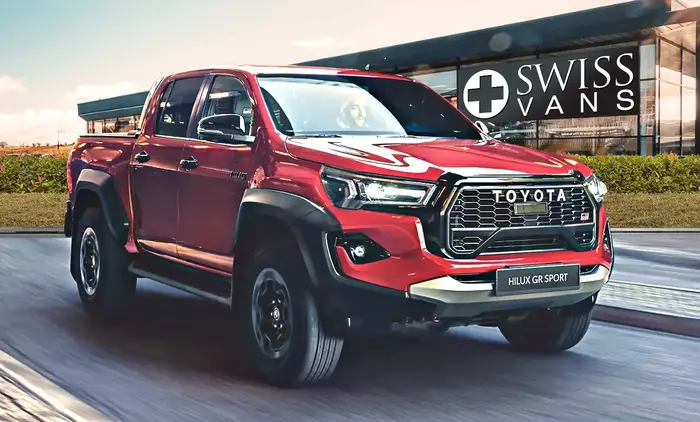
The Toyota Hilux Invincible X has a reputation for balancing power and efficiency, making it a popular choice for drivers who need a robust vehicle without compromising on fuel economy. To gain a comprehensive understanding of the Toyota Hilux fuel efficiency, it’s essential to examine its fuel economy ratings, real-world performance, and the factors that affect fuel consumption. See Toyota Hilux GR Sport
Fuel Economy Ratings
The fuel economy ratings of the Toyota Hilux vary depending on the engine size and transmission type. The 2.4-liter diesel engine, when paired with a manual gearbox, can achieve up to 32.8 mpg according to WLTP tests. This figure drops slightly to 30.7 mpg with an automatic transmission. The larger 2.8-liter engine offers similar efficiency, capable of 33.2 mpg at best with a manual transmission or 30.7 mpg with an automatic. See all Toyota Hilux lease deals
These official ratings provide a baseline for potential buyers to consider. However, it’s important to note that these figures are obtained under controlled conditions and may not always reflect real-world driving scenarios.

Real-World MPG Performance Toyota Hilux Fuel Economy
In practice, the New Toyota Hilux demonstrates decent fuel economy, often coming close to its official ratings. When put through scientific True MPG tests, the 2.8-liter diesel-equipped Hilux Invincible X averaged an impressive 35.0 mpg combined. This performance showcases the Hilux’s ability to deliver efficient fuel consumption even in real-world conditions.
During a group test comparing the Toyota Hilux acessories with competitors like the Ford Ranger and Volkswagen Amarok, the Hilux achieved an average of 30.2 mpg. This result not only aligns closely with the official ratings but also proved to be the most efficient among the tested vehicles, albeit by a small margin.
It’s worth noting that with its 80-liter fuel tank capacity, a Hilux achieving this level of efficiency could potentially cover up to 531 miles before requiring a refuel. This range makes it a practical choice for long-distance driving and remote work sites.

Factors Affecting Fuel Consumption
Several factors can have an impact on the Toyota Hilux fuel economy. Understanding these can help drivers maximize their vehicle’s efficiency:
- Driving manner: Aggressive acceleration and braking can significantly increase fuel consumption. Maintaining a stable driving style is key to optimizing fuel efficiency.
- Speed: The optimal speed for fuel efficiency on highways is around 60 mph when the vehicle is in its highest gear. Higher speeds require exponentially more power, leading to increased fuel consumption.
- Air conditioning: Using the air conditioner in “recirculation” mode can help reduce fuel consumption, as cooling the air inside the cabin is more efficient than constantly cooling outside air.
- Tire pressure: Maintaining the manufacturer-recommended tire pressure is crucial for minimizing fuel consumption and ensuring optimal tire wear and vehicle safety.
- Aerodynamics: Keeping windows rolled up, especially at speeds above 45 mph, helps maintain the vehicle’s aerodynamics and reduces fuel consumption.
- Vehicle weight: Removing unnecessary weight from the vehicle, particularly from the cargo area, can immediately boost performance and economy.
By considering these factors and implementing fuel-saving techniques, Hilux owners can work to improve their vehicle’s fuel efficiency and get the most out of every tank of fuel.

Comparing Hilux Engine Options
2.4L Diesel Engine Efficiency
The Toyota Hilux offers a 2.4-liter diesel engine as an entry-level option. This 16-valve DOHC four-cylinder unit, equipped with a variable nozzle turbocharger and an intercooler, generates 148bhp at 3,400rpm and 400Nm of maximum torque between 1,600 and 2,000rpm. It has a reputation for balancing power and efficiency, making it a popular choice for drivers who need a robust vehicle without compromising on fuel economy.
The 2.4-liter engine has a fuel economy rating of up to 31.7mpg, depending on the bodystyle and specification. This efficiency is achieved through various measures, including a resin head cover, a polyamide cylinder head cover, and a thinner cylinder head structure. The engine also features an electronically controlled common rail fuel injection system and precise pilot injection, which contribute to stable combustion and high thermal efficiency.
2.8L Diesel Engine Performance Toyota Hilux Fuel Economy
For those seeking more power, the Toyota Hilux offers a 2.8-liter diesel engine. This larger unit produces 201bhp at 3,400rpm and delivers an impressive 500Nm of torque between 1,600 and 2,800rpm when paired with the automatic transmission. The manual transmission version provides 420Nm of torque between 1,400 and 3,400rpm.
The 2.8-liter engine has a significant impact on the Hilux’s performance. It reduces the 0-62mph acceleration time by 2.1 seconds compared to the 2.4-liter unit, bringing it down to 10.7 seconds with the automatic transmission. This enhanced performance comes with only a modest difference in fuel efficiency. The official WLTP combined cycle data shows 28.5 – 30.0mpg for the automatic transmission and 31.3 – 33.2mpg for the manual transmission.

Balancing Power and Fuel Economy
Both engine options in the Toyota Hilux demonstrate a commendable balance between power and fuel economy. The 2.4-liter engine offers decent fuel efficiency, making it suitable for those prioritizing economy. On the other hand, the 2.8-liter engine provides a significant boost in performance without a substantial compromise in fuel consumption.
To further enhance fuel efficiency, Toyota has equipped the Hilux with three driving modes: Normal, Economy, and Power. The Economy mode optimizes fuel consumption by adjusting throttle response and power delivery. This mode is particularly useful in urban driving conditions, where it helps to improve the Toyota Hilux fuel economy without significantly impacting performance.
Both engines have the capability to tow up to 3,500kg and offer a payload capacity of up to 1,030kg. However, it’s worth noting that when these engines are working hard, the Hilux’s fuel economy may not be as impressive as it could be under lighter loads.
In real-world conditions, drivers can expect fuel consumption to vary based on driving style, load, and terrain. Some Hilux owners report achieving over 900km per tank, showcasing the potential for impressive fuel economy in optimal conditions.

Maximizing Fuel Economy in Your Hilux
To get the most out of your Toyota Hilux fuel economy, there are several strategies that drivers can employ. By implementing these techniques, Hilux owners can significantly improve their vehicle’s efficiency, reducing fuel consumption and environmental impact.
Driving Techniques for Better MPG
Adopting fuel-efficient driving habits can have a substantial impact on the Toyota Hilux’s fuel economy. One of the most effective techniques is maintaining a steady speed, especially on highways. Cruise control, when available, is an excellent tool for keeping a consistent pace and optimizing fuel usage.
Anticipating traffic flow and avoiding sudden acceleration or braking can also lead to better fuel efficiency. By looking ahead and adapting to the road conditions, drivers can minimize unnecessary fuel consumption. Smooth acceleration and gentle braking not only save fuel but also reduce wear and tear on the vehicle.
When driving at speeds above 45 mph, it’s advisable to keep windows and sunroofs closed to reduce drag. This simple action can have a noticeable impact on fuel economy, particularly during long highway journeys.
Maintenance Tips for Optimal Efficiency
Regular maintenance plays a crucial role in maintaining the Toyota Hilux’s fuel efficiency. One of the most important aspects is keeping the tires properly inflated. Checking tire pressure weekly and ensuring it matches the figures in the owner’s manual can significantly reduce fuel consumption.
Cleaning or replacing the air filter regularly is another essential maintenance task. A clean air filter allows the engine to breathe more efficiently, improving both performance and fuel economy. Similarly, keeping the Mass Air Flow (MAF) sensor and Manifold Absolute Pressure (MAP) sensor clean can help maintain optimal fuel efficiency.
For diesel Hilux models, having the injectors tested and, if necessary, refurbished can lead to smoother operation, increased power, and improved fuel consumption. Some Hilux owners have reported significant improvements in fuel economy after addressing injector issues.
Utilizing Eco-Driving Features Toyota Hilux Fuel Economy
Many Toyota Hilux models come equipped with eco-driving features designed to optimize fuel efficiency. The Eco mode, activated by pressing the ECO button on the center console, adjusts the throttle response for smoother acceleration and reduced fuel consumption. This mode is particularly useful in urban driving conditions, where it can help maintain efficiency without sacrificing necessary performance.
For hybrid Hilux models, familiarizing oneself with the hybrid information display can provide valuable insights into energy usage and help drivers maximize electric-only driving. Using the EV (Electric Vehicle) mode in urban traffic, when available, allows the vehicle to run solely on electric power for short distances, significantly reducing fuel consumption.
Braking technique is also crucial in hybrid models. Gentle and early braking allows the regenerative braking system to capture more energy, storing it in the hybrid battery for later use. This practice extends the duration of electric-only driving, further improving overall fuel economy.
By implementing these driving techniques, maintaining the vehicle properly, and making effective use of eco-driving features, Toyota Hilux owners can significantly enhance their fuel efficiency. These practices not only lead to cost savings but also contribute to reduced emissions and a more sustainable driving experience.
The Future of Hilux Fuel Efficiency
As Toyota continues to evolve its legendary pickup, the future of Toyota Hilux fuel economy looks promising. The company is taking significant steps to balance power and efficiency, with a focus on sustainability and meeting diverse customer needs.
Hybrid and Electric Possibilities
Toyota is making strides in electrifying the Hilux, recognizing the growing demand for more fuel-efficient options. The introduction of the Hilux Hybrid 48V marks a significant milestone in this journey. This mild hybrid system, set to arrive in mid-2024, combines the robust 2.8-liter diesel engine with a compact motor generator and a 48V lithium battery. This innovative setup has the potential to improve fuel efficiency by up to 5% compared to the conventional diesel powertrain.
The Hilux Hybrid 48V not only enhances fuel economy but also delivers improved performance and smoother driving across various terrains. It maintains the Hilux’s exceptional towing and payload capacities while reducing emissions, aligning with Toyota’s multi-technology pathway to carbon neutrality.
Looking further ahead, Toyota has announced plans to produce an all-electric Hilux, with production set to begin in late 2025. This move reflects the company’s gradual expansion into the full EV sector. While details are still emerging, early indications suggest a focus on urban and regional usability, with a potential range of approximately 200km.
Toyota is also exploring hydrogen fuel cell technology for the Hilux. The company is participating in research and development projects to promote technological demonstrations of heavy-duty fuel cell trucks. This aligns with Toyota’s view that hydrogen will play a crucial role in achieving carbon neutrality.
Toyota’s Commitment to Sustainability
Toyota’s approach to the future of Hilux fuel efficiency is part of a broader commitment to sustainability. The company has outlined its vision in the Toyota Environmental Challenge 2050, which includes six specific challenges aimed at achieving zero CO2 emissions and a net positive environmental impact.
To accelerate these environmental initiatives, Toyota announced the Seventh Toyota Environmental Action Plan—2025 Target. This five-year action plan is designed to contribute to the realization of a sustainable society, including addressing the Sustainable Development Goals (SDGs).
Toyota’s strategy involves offering a full lineup of electrified vehicles, including hybrid electric vehicles (HEVs), plug-in hybrid electric vehicles (PHEVs), battery electric vehicles (BEVs), and fuel cell electric vehicles (FCEVs). This diverse approach aims to provide customers with a wide range of choices to suit different needs and local infrastructure.
The company is also investing heavily in research and development, with plans to invest 5 trillion yen in BEV-related R&D and capital investment by 2030. This commitment extends to the development of sustainable biofuels and synthetic fuels as additional measures to reduce CO2 emissions from the existing fleet of vehicles.
Conclusion
The Toyota Hilux has proven its ability to balance power and efficiency, offering a range of engine options to meet diverse needs. Its fuel economy ratings, real-world performance, and various fuel-saving technologies demonstrate Toyota’s commitment to delivering a vehicle that’s both capable and economical. What’s more, the introduction of hybrid technology and plans for an all-electric Hilux show Toyota’s dedication to pushing the boundaries of fuel efficiency in the pickup truck segment.
Looking ahead, Toyota’s focus on sustainability and its multi-technology approach to achieving carbon neutrality paint a promising picture for the future of the Hilux. As the automotive industry continues to evolve, the Hilux is well-positioned to adapt and thrive, offering drivers a robust and efficient vehicle that can handle tough jobs while keeping an eye on fuel consumption. This ongoing evolution ensures that the Hilux will continue to be a top choice for those seeking a powerful, reliable, and fuel-efficient pickup truck.
FAQs Toyota Hilux Fuel Economy
What are the fuel consumption rates for different Toyota Hilux models?
The 2024 Toyota Hilux, available as a 2 or 5 seat Cab Chassis or Ute with a 5-star ANCAP safety rating, features both diesel and petrol engines. Its fuel economy varies from 7.1L/100km to 11.1L/100km, depending on the specific model badge.
How can I enhance the fuel efficiency of my Toyota Hilux?
To improve your Hilux’s fuel economy, try slowing down when ascending hills. This approach reduces the extra fuel consumption caused by increased wind resistance, allowing you to use the momentum from descending hills to re-accelerate. Note that carrying heavy loads or additional equipment, especially on the roof, can significantly increase fuel consumption due to greater wind resistance at higher speeds.
Which Toyota Hilux model is the most fuel-efficient?
The Toyota Hilux 2.4GD-6 Double Cab SR is notably fuel-efficient, consuming just 7.1 liters per 100km. This model proves that it’s possible to have a functional and efficient vehicle that still fulfills all the necessary job requirements.
What is the capacity of the Toyota Hilux’s fuel tank?
The capacity of the Toyota Hilux fuel tank varies depending on the model and specifications.