VW ID Buzz Price Guide: Is This Electric Van Worth the Investment?
The Volkswagen ID Buzz has caused a stir in the electric vehicle market, sparking curiosity about its price and value proposition. This modern reinterpretation of the iconic VW Microbus combines nostalgic design with cutting-edge electric technology, making it a unique offering in the automotive landscape. As potential buyers weigh their options, understanding the VW ID Buzz price and its features becomes crucial to determining whether it’s a worthwhile investment.
This guide delves into the various aspects of the ID Buzz to help consumers make an informed decision. It examines the pricing structure, including options for leasing and financing, and compares it to similar vehicles in the market. The article also explores the van’s performance, range, interior space, practicality, and technological features. By the end, readers will have a comprehensive understanding of what the ID Buzz offers and whether its cost aligns with their needs and expectations.
Overview of the VW ID Buzz
The Volkswagen ID Buzz represents a groundbreaking fusion of nostalgia and innovation, reimagining the iconic VW Microbus for the electric age. This all-electric vehicle combines the charm of its predecessor with cutting-edge technology, making it a unique offering in the automotive market.
Key Features
The ID Buzz boasts impressive specifications that cater to both private and commercial customers. Its electric motor, cleverly housed in the rear, delivers a maximum output of 150 kW (equivalent to 204 PS). The lithium-ion high-voltage battery, located in the vehicle floor, offers a net energy content of 77 kWh (gross: 82 kWh). This configuration allows the ID Buzz to travel up to 257 miles without recharging, making it suitable for a wide range of daily challenges.
One of the standout features is its fast-charging capability. With a maximum charging power of up to 170 kW for DC charging, the battery can be charged from 5% to 80% in approximately 30 minutes. This rapid charging time enhances the vehicle’s practicality for long journeys and commercial use.
The ID Buzz also demonstrates impressive performance metrics. It accelerates from 0 to 62 mph in 10.2 seconds and has a maximum torque of 310 Nm available on demand. The vehicle’s low center of gravity, thanks to the battery location, contributes to its agility. A notably small turning circle of just 11.1 meters makes it easily maneuverable in urban environments.
Design and Styling
The design of the ID Buzz pays homage to its predecessor while embracing modern esthetics. The exterior features a V-shaped hood and a prominent VW logo, creating a charismatic front facade. A light strip connects the headlamps, adding a contemporary touch. The side and rear designs continue the separation into upper and lower zones, reminiscent of the historic T1, especially noticeable with the optional two-tone paintwork.
The ID Buzz’s body proportions are pragmatically designed to maximize space efficiency. Large wheels positioned at the outer corners allow for optimal use of the compact footprint. The vehicle achieves an impressive drag coefficient (cw-value) of 0.285, significantly improving upon the 0.44 of the classic T1.
Interior design focuses on creating a modern, lounge-like atmosphere. The dashboard is linear and quietly stacked, echoing the T1’s design while incorporating digital displays and a multifunction steering wheel. The color schemes in the optional “Style” interior packages correspond to the exterior paintwork, with “Electric White” adding a fresh accent.
Available Variants
The ID Buzz comes in several variants to cater to different needs:
ID Buzz Pro: The standard model with a 77 kWh battery, 204 bhp rear motor, and seating for five people with a 1,100-liter boot capacity.
ID Buzz Pure: An entry-level version with a smaller 58 kWh battery, likely available only in the standard wheelbase five-seater form.
ID Buzz Cargo: An all-electric panel van designed for commercial use, capable of accommodating two EU pallets side-by-side.
Long-wheelbase version: A future variant that will offer an even larger battery (potentially up to 100 kWh) and seating for at least seven passengers with a flexible rail system for seat configuration.
ID Buzz California: A camper van version based on the long-wheelbase model, expected to launch in 2025.
Dual-motor version: A future all-wheel-drive variant that will offer enhanced performance and traction.
These diverse options ensure that the ID Buzz can meet a wide range of consumer and commercial needs, from family transportation to business logistics, all while maintaining its unique blend of retro charm and modern electric efficiency.
Pricing Breakdown
The Volkswagen ID Buzz, with its unique blend of nostalgia and modern electric technology, comes with a price tag that reflects its innovative features and design. Potential buyers should consider various factors when evaluating the cost of this electric van.
Base Model Costs
The ID Buzz lineup starts with the Life trim, which has a Manufacturer’s Direct Price of £59,035 including VAT. This base model offers a 77 kWh battery and a single-speed automatic transmission, delivering zero CO2 emissions. For those seeking additional features, the Style trim is available at £63,835 including VAT. These prices include delivery to the retailer, number plates, the first year’s Vehicle Excise Duty, and VAT calculated at 20%.
It’s worth noting that Volkswagen Commercial Vehicles UK reserves the right to adjust prices from time to time, particularly in response to changes in regulations or legislation. Potential buyers should always confirm the most up-to-date pricing with their chosen Van Center or Volkswagen retailer.
Optional Extras
While the base models offer a comprehensive package, Volkswagen provides several optional extras to customize the ID Buzz to individual preferences. However, these additions can significantly increase the overall cost:
Two-tone paint: This signature feature, which includes matching interior trim on Style models, adds a distinctive character to the vehicle but comes at a premium of £2,790.
Alternative paint colors: Any paint option other than white incurs an additional cost of £1,100.
Larger wheels: Upgrading to 21-inch wheels will set buyers back £2,100.
Interior upgrades: For those looking to enhance the cabin, white seat trim is available for £1,100.
Advanced features: The highly efficient heat pump, which can extend the vehicle’s range, is offered as an optional extra.
These options, while enhancing the vehicle’s esthetics and functionality, can quickly escalate the price. For instance, a top-spec Style trim with £7,350 worth of optional extras can bring the total cost to £71,065.
Comparison to Competitors
When considering the ID Buzz’s price point, it’s essential to compare it with similar vehicles in the market:
Tesla Model X: Recent price adjustments have made the Tesla Model X Long Range more competitive, with a starting price of £52,990 after a £5,000 discount. This undercuts the ID Buzz by a significant margin.
Volkswagen Multivan: The Multivan 1.4 eHybrid Style, another offering from Volkswagen, has a list price of £59,545 and a target price of £58,665, positioning it slightly lower than the ID Buzz.
While the ID Buzz may seem pricey at first glance, it’s important to consider the potential long-term savings associated with electric vehicles. Lower running costs, reduced maintenance requirements, and potential tax benefits for company car users can offset the higher initial investment. Additionally, attractive monthly finance options are available, likely due to strong residual values stemming from the vehicle’s desirability.
Ultimately, the pricing of the ID Buzz reflects its unique position in the market as a versatile, all-electric van with a distinctive design heritage. Buyers must weigh the initial cost against the vehicle’s features, potential savings, and their specific needs to determine if it represents a worthwhile investment.
Performance and Range
The Volkswagen ID Buzz combines innovative electric drive technology with everyday practicality, offering a dynamic driving experience while maintaining zero CO2 emissions. This electric van’s performance and range capabilities make it a compelling option for those seeking an eco-friendly vehicle without compromising on functionality.
Battery Capacity
At the heart of the ID Buzz lies a lithium-ion high-voltage battery with a total capacity of 82 kWh. The usable capacity stands at 77 kWh, providing ample energy storage for daily use. This substantial battery capacity forms the foundation for the vehicle’s impressive range and performance capabilities.
Charging Options
The ID Buzz offers versatile charging options to suit various scenarios:
Home Charging: The most economical method is using a home wallbox charger. With a Type 2 connector and an on-board charger capable of 11 kW maximum power, a fully depleted battery can be recharged in approximately 8 hours and 15 minutes. However, this requires a 3-phase grid connection, which many homes lack. In most cases, the maximum charging power will be 7.4 kW, resulting in a charge time of 12 hours and 15 minutes.
Public Charging: For on-the-go charging, the ID Buzz supports rapid charging through a CCS connection. The maximum rapid charge power is an impressive 175 kW, although the average charge power in a typical session is around 115 kW. This allows for charging the battery from 10% to 80% in approximately 30 minutes, adding about 145 miles of range.
Emergency Charging: In situations where other options are unavailable, charging using a regular wall plug is possible, though it takes considerably longer at around 39 hours and 30 minutes for a full charge.
To enhance the charging experience, the ID Buzz features Plug & Charge technology. After initial setup, the vehicle automatically authenticates at compatible charging stations, streamlining the process for users.
Real-World Range
While the official WLTP range for the ID Buzz is up to 257 miles on a single charge, real-world performance can vary based on several factors:
Driving Conditions: Climate, terrain, use of climate control systems, and driving style significantly impact the actual range. For instance, sustaining high speeds in cold weather could reduce the range to around 150 miles, while driving at low speeds in mild weather can extend it to approximately 310 miles.
Energy Consumption: The combined energy consumption of the ID Buzz Pro is about 367 Wh per mile, equivalent to 110 mpg in a traditional petrol car. However, this can fluctuate between 248 Wh per mile in optimal conditions to 513 Wh per mile in challenging scenarios.
Seasonal Variations: Like many electric vehicles, the ID Buzz’s range and efficiency are affected by colder temperatures. During winter months, the lack of a heat pump in early versions contributed to a noticeable decrease in range.
Real-World Testing: In typical autumn conditions in the UK, the ID Buzz displayed an indicated range of 230 miles, which is reasonably close to the WLTP figure. However, in near-freezing temperatures, the efficiency dropped to 2.7 mi/kWh, translating to a real-world range of about 208 miles.
These factors highlight the importance of considering real-world conditions when evaluating the ID Buzz’s performance and range capabilities. While it may not boast the longest range in its class, the combination of reasonable real-world performance and rapid charging capabilities makes the ID Buzz a practical choice for many drivers transitioning to electric mobility.
Interior Space and Practicality
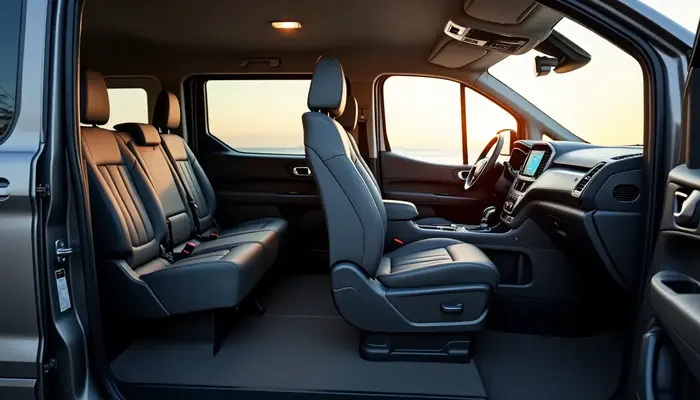
The Volkswagen ID Buzz stands out for its exceptional interior space and practicality, offering a unique blend of comfort and versatility. Its van-derived shell provides ample room for passengers and cargo alike, making it an ideal choice for families and those who require substantial storage capacity.
Seating Configurations
The ID Buzz offers various seating configurations to suit different needs. The standard short-wheelbase (SWB) model comes with five seats, while the long-wheelbase (LWB) version, set to launch in late 2023, will accommodate up to seven passengers. Both variants feature a sliding rear bench that allows for adjustable legroom or increased boot space as needed.
In the five-seat configuration, the rear bench has a 60:40 split, providing flexibility for cargo and passenger arrangements. The six-seat layout, available in some models, creates a walkway between seats, facilitating easy access to the third row. For maximum versatility, the seven-seat version offers individual folding seats in the third row.
The ID Buzz excels in passenger comfort with its spacious interior. The tall roof provides over one meter of headroom, allowing small children to stand upright when entering or exiting the vehicle. Legroom is generous throughout, thanks to the 2,989mm wheelbase in the SWB model and an even longer 3,239mm in the LWB version.
Cargo Capacity
When it comes to cargo capacity, the ID Buzz is unrivaled in its class. The SWB model boasts an impressive 1,121 liters of boot space with all seats in place, surpassing many larger SUVs. This capacity increases dramatically when the rear seats are folded, offering up to 2,232mm of load length.
The LWB version takes practicality to new heights:
With all seven seats up: 306 liters
In five-seat mode: 1,340 liters
With all rear seats folded: A cavernous 2,469 liters
These figures put the ID Buzz leagues ahead of its electric SUV competitors. For instance, it offers nearly double the cargo space of a Tesla Model Y (971 liters) and significantly more than the Kia EV6 (up to 542 liters) or Skoda Enyaq (585 liters).
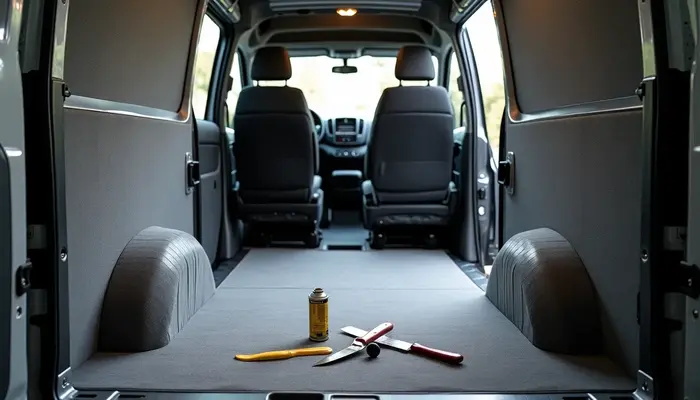
The cargo area is thoughtfully designed with a square shape and flat sides, maximizing usable space. The distance between wheel arches measures 1,204mm, accommodating a wide range of items. An optional Multiflex floor can be added to create a completely flat load area when the seats are folded, along with additional underfloor storage.
Family-Friendly Features
The ID Buzz is packed with features that cater to family needs:
Sliding doors: Electrically operated sliding side doors provide easy access, especially in tight parking spaces.
ISOFIX points: Five-seat models have two sets of ISOFIX child seat attachments on the rear bench, while six and seven-seat versions offer additional points in the third row.
Storage solutions: The cabin is replete with storage options, including deep door pockets, a removable center console (Buzz Box), and various compartments throughout.
USB ports: Conveniently located in the doors for rear passengers to charge devices.
Fold-out tables: Available on the back of the front seats, providing a useful surface for rear passengers.
Electric tailgate: Standard on all models, making it easier to access the boot in tight spaces.
While the ID Buzz excels in many areas, it’s worth noting that some features found in traditional MPVs, such as removable seats or a central armrest for rear passengers, are not available. Additionally, the high floor in the rear, while providing a flat surface, may slightly impact the overall sense of space compared to some van-based MPVs.
Despite these minor drawbacks, the Volkswagen ID Buzz’s interior space and practicality make it a standout choice in the electric vehicle market, particularly for those prioritizing versatility and cargo capacity.
Technology and Connectivity
Infotainment System
The Volkswagen ID Buzz comes equipped with a state-of-the-art infotainment system, featuring a 12.9-inch touchscreen mounted on the dashboard. This system, while more responsive than earlier Volkswagen iterations, still has room for improvement compared to some competitors like the BMW iX3. The 2024 model update introduced a more advanced 5.2 software version, which has significantly enhanced the system’s speed and responsiveness.
One of the standout features is the integration of ChatGPT into the voice control system. This allows users to ask a wide range of general questions, making the interaction more intuitive and versatile. The system also includes wireless Android Auto and Apple CarPlay, enabling seamless smartphone integration.
For connectivity, the ID Buzz offers a three-year We Connect Plus data connection. This feature supports music streaming, connected destination searching, and smartphone-based app functionality. The vehicle also acts as a digital living room and mobile office, with optional folding tables on the front seat backrests for laptops or tablets.
Driver Assistance Features
The ID Buzz is packed with an array of driver assistance systems to enhance safety and convenience. Standard features include:
Autonomous Emergency Braking (AEB) with pedestrian and cyclist protection
Lane-keeping assistance
Road-sign recognition
Driver Alert System
Swerve support
Oncoming vehicle braking when turning
Car2X traffic hazard alert function
For those seeking additional support, the optional Assistance Package Plus adds blind-spot monitoring and a self-steering function to maintain lane position on faster roads.
One of the most advanced features is the Travel Assist system. It keeps the vehicle in its lane, maintains a safe distance from the vehicle in front, and adheres to speed limits set by the driver. The system adapts to the driver’s style and can position the vehicle off-center in the lane if preferred. When enhanced with swarm data, Travel Assist can function even on roads without central lane markings, significantly improving its availability and effectiveness.
Smartphone Integration
The ID Buzz excels in smartphone integration, offering multiple options for connectivity and charging. The vehicle comes standard with wireless device charging and a slot near the indicator stalk for this purpose. Additionally, it features numerous USB-C ports throughout the interior:
Two ports with data transfer capability near the steering column
One port in the front passenger door
Optional additional ports in the interior mirror base and sliding doors
Two more ports planned for the load compartment walls
Most of these ports support the USB Power Delivery (USB-PD) charging standard, allowing for rapid charging up to 45 watts. This means compatible devices can charge up to 50% in about 30 minutes.
The integration of smartphones goes beyond charging. The App-Connect wireless feature allows for seamless integration of smartphone apps into the vehicle’s native environment. Users can choose between Android Auto and Apple CarPlay technologies, enabling easy access to music, news, maps, and audiobooks through the infotainment system or voice control.
For enhanced functionality, the We Connect ID app allows owners to remotely control charging, manage electric stationary air conditioning, and check battery charge levels from their smartphones. This integration transforms the ID Buzz into a truly connected vehicle, bridging the gap between personal devices and automotive technology.
Conclusion: Is It Worth the Investment?
The Volkswagen ID Buzz stands out as a unique offering in the electric vehicle market, blending nostalgic design with cutting-edge technology. Its spacious interior, versatile seating configurations, and impressive cargo capacity make it a practical choice for families and businesses alike. The vehicle’s performance, range, and charging capabilities, while not class-leading, are more than sufficient to meet most daily driving needs.
To wrap up, the ID Buzz’s price point reflects its innovative features and design, but potential buyers should weigh this against long-term savings and available financing options. With its advanced technology, family-friendly features, and eco-friendly credentials, the ID Buzz has the potential to revolutionize the electric van segment. Whether it’s worth the investment ultimately depends on individual needs and preferences, but for those seeking a blend of style, practicality, and sustainability, the ID Buzz offers a compelling package.
FAQs
What kind of driving range can you expect from the VW ID Buzz?
The VW ID Buzz is officially rated to travel up to 260 miles on a full charge. However, real-world conditions such as temperature and driving habits may reduce this range to between 180 and 230 miles.
How much does the 2024 VW ID Buzz cost?
The starting price for the entry-level 2024 VW ID Buzz is anticipated to be around GBP 35,353.36, while the all-wheel drive variant is expected to start at approximately GBP 39,281.51. The vehicle is slated to be available for sale at the beginning of 2024.
Is it possible to sleep in the VW ID Buzz?
Yes, the VW ID Buzz accommodates flexible sleeping arrangements. It offers both single and double bed configurations, allowing you to customize the sleeping setup as per your needs. When the vehicle is in motion, the bed system can be conveniently stored in the trunk or on the rear seat.
What are the differences between the ID Buzz Life and Buzz Style models?
The ID Buzz Life model features 19-inch “Tilburg” alloy wheels and 10-color ambient lighting. In contrast, the ID Buzz Style is equipped with 20-inch “Solna” alloy wheels, 30-color adaptive interior ambient lighting, and additional tailgate surround lighting, offering more customization options.